


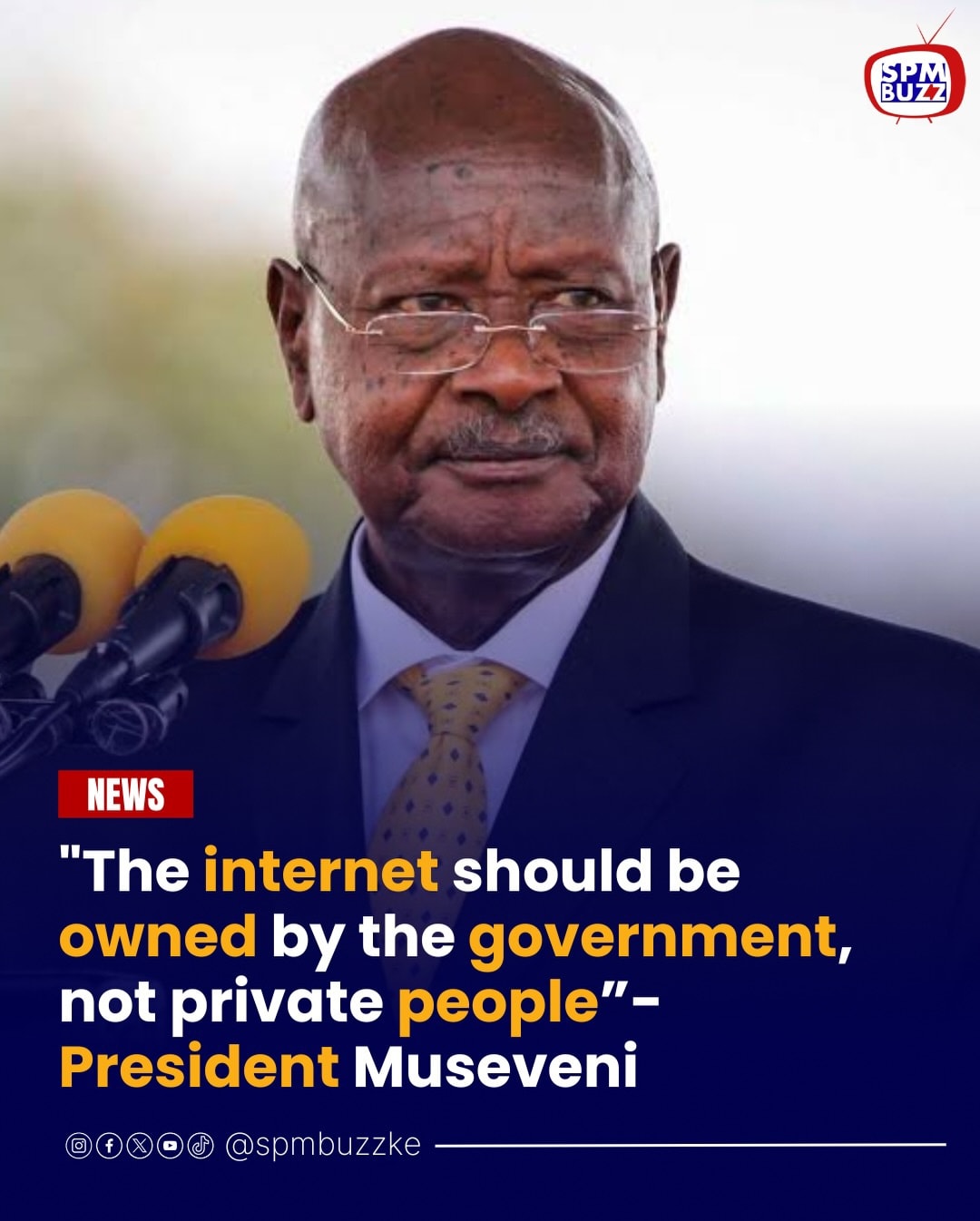
President Yoweri Kaguta Museveni has once again sparked a national debate after asserting that “the internet should be owned by the government, not private people.” The remark—made during a public address this week—reignited long-standing concerns about digital freedoms, state control of online platforms, and the future of Uganda’s information ecosystem.
Museveni argued that private ownership of digital communication channels undermines national stability and leaves critical information infrastructure vulnerable to foreign influence. According to him, placing the internet under full government control would ensure “security, order, and proper ideological guidance.”
However, digital rights activists, media practitioners, and independent analysts warn that such a move could accelerate censorship, weaken free expression, and damage Uganda’s already strained relationship with global technology companies.
A Growing Pattern of Pressure on Private Digital Platforms
Museveni has for years expressed frustration with private social media companies—especially after Facebook restricted several pro-government accounts in 2021. Since then, the government has repeatedly pressured platforms, publications, and content creators to align with state messaging.
Critics argue that the president’s latest statement signals a renewed push toward forcing independent online publications, bloggers, and digital media companies into forms of state supervision or ownership.
“What the president proposes is not internet development—it is internet capture,” one digital policy expert commented. “Government ownership of the entire internet would essentially erase digital independence.”
Analysts Recommend a Constructive Alternative: Build State Platforms Instead of Forcing Private Ones
Observers suggest that if President Museveni wants government-owned digital spaces, the constitutional and economically sound approach is to build those platforms, not seize existing private ones.
A commonly cited example is former U.S. President Donald Trump, who, after repeated disputes with Twitter, did not attempt to force Twitter into government hands, nor demand that private entities conform to state ideology. Instead, he launched Truth Social, a platform owned by his media company, built from scratch to express his views without depending on other corporations.
Analysts are now arguing that Uganda could follow a similar model:
- Construct government-owned data centers
- Build national social platforms
- Expand state internet infrastructure
- Compete fairly instead of coercing private publishers
Such initiatives, they say, would allow the government to communicate its messages freely without undermining private media freedom or violating global norms of digital governance.
The Bigger Debate: Control vs Development
Museveni’s call for exclusive government ownership of the internet raises deeper national questions:
Should the state control digital information flows? Or should it prioritize innovation, competition, and open access?
Many civic groups insist that Uganda’s digital future must be based on infrastructure development—not force.
“Build, innovate, compete. Don’t confiscate,” one civil society leader said. “A confident government does not fear private platforms—it outperforms them.”
As the debate grows, Uganda now faces a crossroads: embrace an open digital landscape or double down on state dominance over online communication. The outcome will shape freedom of expression, media independence, and digital rights for millions of Ugandans in the years ahead.