


KAMPALA, Uganda — January 14, 2026
By Daniel Mpiima, The Pearl of Africa News
This election is not just about leadership; it is about restoring the dignity of the Ugandan vote.” — Bobi Wine
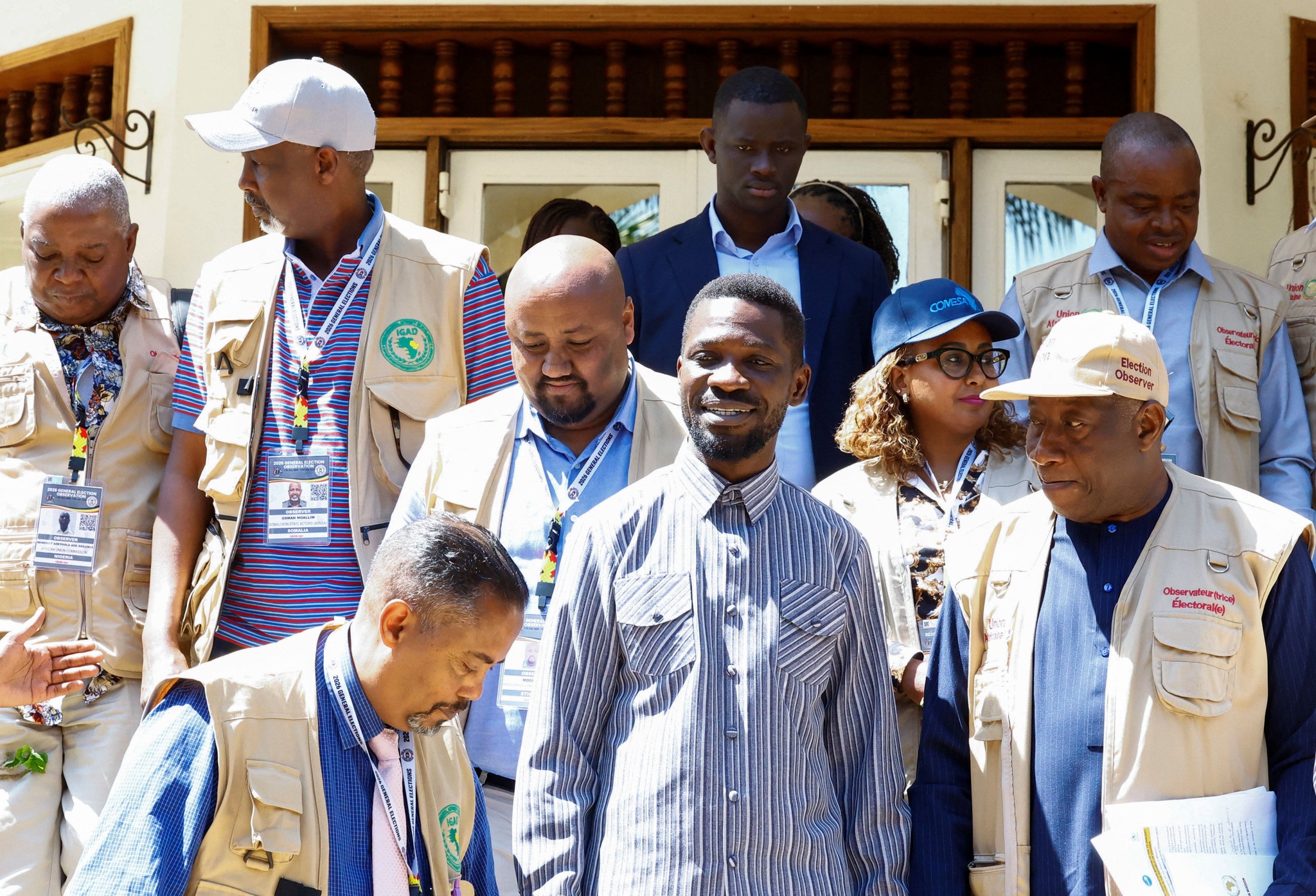
Ugandan presidential candidate Robert Kyagulanyi Ssentamu, popularly known as Bobi Wine, on Wednesday received former Nigerian President Goodluck Jonathan at his home in Magere, on the outskirts of Kampala, as part of engagements with international election observers ahead of Uganda’s highly anticipated general elections scheduled for January 15, 2026.
The meeting, held just hours before the country enters a decisive polling period, underscored the growing international attention on Uganda’s political transition and the credibility of its electoral process. Goodluck Jonathan, a respected statesman and leading figure in election observation across Africa, arrived with a delegation of international observers tasked with assessing the preparedness, transparency, and integrity of the electoral environment.
A Symbolic and Strategic Encounter
Magere, long regarded as both Bobi Wine’s residence and a symbol of opposition resilience, provided a poignant backdrop for the encounter. Over the years, the location has been synonymous with political standoffs, heavy security deployments, and moments of national tension. On Wednesday, however, it became a venue for dialogue on democracy and accountability.
“The presence of international observers at this critical moment sends a clear message that Uganda’s democratic process matters beyond our borders,” Bobi Wine told the delegation.
He briefed the observers on what he described as persistent challenges facing the opposition, including restrictions on campaign activities, a heavy security presence around opposition strongholds, and concerns about voter intimidation in the final days before polling.
Goodluck Jonathan’s Message
Former President Jonathan emphasized that the role of observers is not to interfere with the electoral process, but to bear witness to it and promote confidence in democratic institutions.
“Elections are a cornerstone of democracy,” Jonathan said. “Our duty is to observe, to listen, and to encourage peaceful participation so that the will of the people is clearly expressed and respected.”
Jonathan’s involvement carries particular weight given his own legacy of conceding electoral defeat peacefully during Nigeria’s 2015 elections, a moment widely praised as a milestone for democratic governance on the continent.
Heightened Political Climate
The meeting took place amid an atmosphere of heightened political tension across Uganda. Security deployments have increased in Kampala and surrounding districts, while political actors on all sides are urging calm as the nation approaches polling day. Opposition supporters remain wary, citing past elections that were marred by allegations of irregularities and excessive use of force.
“We are calling on our supporters to remain peaceful and vigilant,” Bobi Wine said. “Our strength lies in our discipline and our commitment to non-violence.”
Civil society groups have echoed similar calls, urging authorities to guarantee the safety of voters, candidates, journalists, and election officials.
International Attention on Uganda
The presence of Goodluck Jonathan and other international observers highlights Uganda’s significance within the regional and continental political landscape. Analysts note that the outcome of the 2026 elections could shape not only Uganda’s internal governance but also democratic norms across East Africa.
“What happens in Uganda will resonate far beyond its borders,” said one observer present at the Magere meeting. “This election is being watched closely because it speaks to broader questions about leadership renewal and democratic accountability in Africa.”
Observers are expected to monitor polling stations across the country, assess vote counting procedures, and issue preliminary findings in the days following the election.
Voices from the Ground
Outside the Magere residence, supporters gathered quietly, some waving national flags, others holding placards calling for free and fair elections. For many, the visit by international observers offered a sense of reassurance.
“Knowing that the world is watching gives us hope,” said a young voter from Wakiso District. “All we want is for our votes to count.”
Looking Ahead
As Uganda prepares to head to the polls, the meeting between Bobi Wine and Goodluck Jonathan stands as a reminder of the stakes involved. Beyond the contest for the presidency, the election represents a test of Uganda’s democratic institutions and its commitment to peaceful political participation.
“History will judge us by how we conduct ourselves in these moments,” Bobi Wine remarked. “We choose courage, peace, and the power of the people.”
With polling day just hours away, Ugandans — and the international community — await the outcome of an election that many believe could define the country’s political future for years to come.