


Date: January 14, 2026
By: The Pearl of Africa Correspondent
In a direct message to Ugandans, presidential candidate Robert Kyagulanyi, widely known as Bobi Wine, has called on citizens to bypass the government’s ongoing internet blackout, describing it as an attempt by the regime to conceal electoral fraud and human rights violations ahead of the January 15, 2026 general elections.
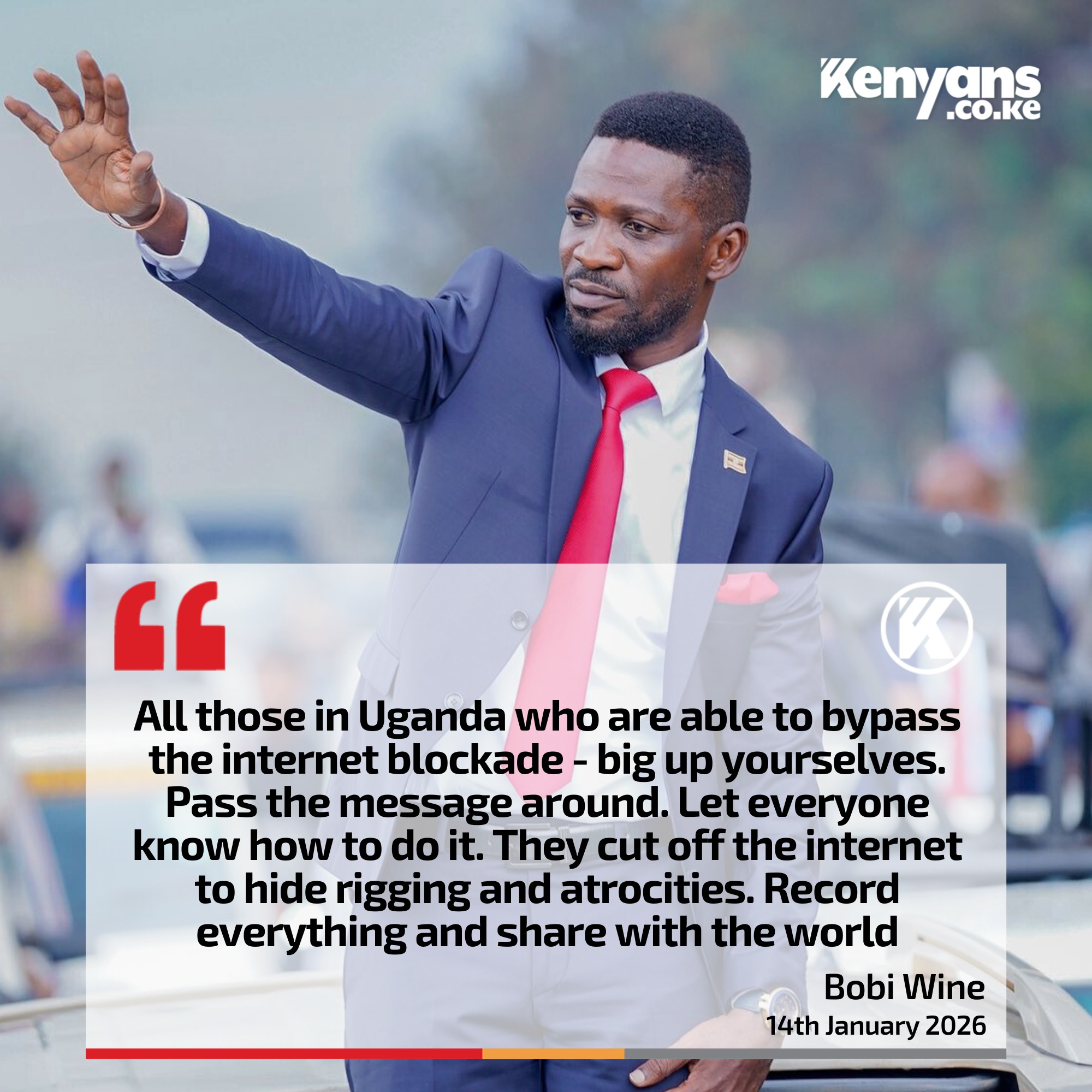
“All those in Uganda who are able to bypass the criminal regime’s internet blockade – big up yourselves! Pass around the message. Let everyone know how to do it,” Kyagulanyi wrote in a social media post. “They cut off the internet in order to hide rigging and atrocities. Record everything and share with the world.”
The statement highlights the increasing tension in Uganda as the country approaches its pivotal elections. The government, led by President Yoweri Museveni, has been accused of restricting digital access to suppress dissent, a move that critics say undermines transparency and democratic processes.
Experts and digital rights advocates have condemned the blackout, noting that internet restrictions disproportionately affect ordinary citizens, journalists, and civil society organizations attempting to monitor election fairness. According to the Uganda Communications Commission, internet shutdowns are often justified under national security concerns, though opponents argue these claims are a pretext for political control.
Bobi Wine, who represents the National Unity Platform (NUP), has been at the forefront of challenging the current administration. His latest message underscores the importance of digital activism and citizen journalism in ensuring that election processes are documented and reported globally.
“Access to information is a cornerstone of democracy,” said David Kato, a digital rights expert based in Kampala. “When governments impose blackouts during critical periods like elections, they compromise the public’s right to know and restrict accountability. Bobi Wine’s call to bypass the internet blockade is not just political rhetoric; it’s a call for transparency and civic responsibility.”
The NUP has repeatedly accused the ruling regime of using state machinery to intimidate opposition supporters. Reports indicate that security forces have surrounded opposition offices, arrested activists, and imposed restrictions on gatherings in addition to shutting down social media and internet services in several regions.
Digital experts emphasize that there are technical means for citizens to circumvent internet restrictions, such as virtual private networks (VPNs) and encrypted communication tools. While these methods can provide temporary relief from censorship, authorities often monitor, block, or penalize users attempting to bypass state-imposed controls.
Despite these challenges, Kyagulanyi’s message encourages Ugandans to actively document election irregularities and human rights abuses. Citizens are urged to capture events through videos, photographs, and live reports to ensure global visibility and accountability.
“This is a critical moment for Ugandans and for democracy in our country,” Kyagulanyi added. “Even under blackout, your voice matters. Record what you see, share it widely, and let the world know the truth about the elections.”
Analysts warn that the internet blackout, if prolonged, could severely impact economic activity, communication, and public services, further escalating tensions during an already sensitive electoral period.
Observers from regional and international bodies have expressed concern over the restrictions, calling on the Ugandan government to respect digital rights and ensure that citizens can freely access information, especially during national elections.
As the January 15 elections approach, the message from Bobi Wine highlights a growing reliance on digital resilience, citizen reporting, and global solidarity to counter information suppression. With millions of Ugandans dependent on online connectivity for communication and news, the outcome of these efforts could play a crucial role in shaping perceptions of election legitimacy both domestically and internationally.