


Saturday, 17 January 2026
By Pearl of Africa Political Desk
Kampala, Uganda
Uganda’s 2026 presidential election has plunged the country into one of the gravest political crises in its modern history, following revelations from leaked Electoral Commission data that sharply contradict the official results declared by the Commission under heavy military presence.
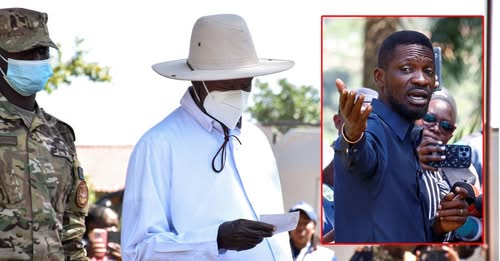
A verified internal video recorded from the Electoral Commission’s results management system on Saturday morning at approximately 10:10am shows National Unity Platform (NUP) candidate Robert Kyagulanyi Ssentamu, widely known as Bobi Wine, leading with 69.66% of counted presidential votes. Incumbent President Yoweri Museveni, seeking a seventh term after nearly four decades in power, is shown trailing at 25.95%.
Yet, at the same time that these figures were visible internally, Electoral Commission Chairperson Simon Byabakama publicly announced an entirely different outcome, declaring Museveni the winner with 71.65% without disclosing polling station breakdowns or district-level sources.
“The numbers being read do not correspond with what is captured in the Commission’s own system,” said one senior election observer who reviewed the leaked footage.
Internet Shutdown Before and During Tallying
Ahead of polling day, the Ugandan government ordered a nationwide internet shutdown and directed at least two domestic rights organisations to suspend their election monitoring operations. Authorities framed the move as a security precaution, but civil society groups warned it would cripple transparency and independent verification.
With digital communications disabled, journalists and observers were unable to cross-check results transmitted from polling stations, creating an information vacuum that has since fueled widespread suspicion.
Electoral Commission Under Pressure
Throughout the results announcement, Byabakama repeatedly declined to name the districts from which the Commission’s figures originated. Pressed by reporters for transparency, he avoided direct responses and continued reading aggregated national totals without verifiable source data.
“Where exactly are these numbers coming from?” one journalist asked during the briefing. The question went unanswered.
Election analysts say the refusal to provide polling station details violates established democratic norms and undermines public trust in the tallying process.
Military Siege at Bobi Wine’s Residence
Simultaneously, military and police forces surrounded Bobi Wine’s home shortly after he cast his ballot. According to NUP officials, soldiers jumped the perimeter fence, dismantled the electric security barrier, and cut off electricity supply to the compound.
Private guards at the residence were reportedly assaulted, leaving the home in total darkness while security operatives attempted forced entry.
“This is not strength; it is fear,” Bobi Wine said earlier before communications were lost. “They are afraid of the people after stealing their vote.”
By Friday evening, NUP sources claimed Wine had been removed from the residence by helicopter to an undisclosed location. Police later said they had no official record of the operation, though internet restrictions made independent verification impossible.
Abductions of Senior NUP Leaders
NUP Vice Presidents Dr. Lina Zedriga and Jolly Tukamushaba were abducted while coordinating party agents in Northern and Western Uganda respectively. Party officials say the two were violently taken by military personnel and remain missing.
Hours later, armed forces reportedly raided the home of NUP Deputy President for Buganda, Hon. Muwanga Kivumbi, where ten supporters were killed.
Election Violence Escalates
Reports from Butambala, Luweero and Kalungu districts confirm at least twelve civilians were shot dead during protests over the disputed results. Local monitors estimate that more than sixty Ugandans were killed nationwide in election-related violence within 48 hours.
Across Kampala, tally centres turned into confrontation zones as soldiers arrested opposition supporters attempting to monitor results.
“Voting centres have become battlegrounds,” one resident said. “People are being arrested simply for asking questions.”
Parliamentary Vote Manipulation Alleged
NUP Secretary General David Lewis Rubongoya described similar irregularities in parliamentary tallies, particularly in Kampala Central where returning officers allegedly inserted thousands of unexplained votes from polling stations located near State House and military barracks.
Despite winning in 17 out of 20 parishes, the NRM candidate was declared victor.
“They are proving only one thing — that the will of the people no longer matters under this regime,” Rubongoya said.
Broader Democratic Concerns
The election took place amid mass arrests of opposition candidates, intimidation of voters, suppression of observers and alleged bribery attempts targeting detained politicians. NUP states that more than twenty of its candidates were abducted in the lead-up to the vote.
Political commentators say Uganda’s crisis reflects a wider continental challenge where long-serving governments increasingly rely on state machinery, security forces and information blackouts to control electoral outcomes.
“Elections without transparency are not elections; they are declarations,” said a regional governance expert.
Regional and International Implications
Uganda’s instability raises serious concerns for East Africa’s democratic trajectory, investor confidence and regional peace. Observers warn that suppression of legitimate electoral processes risks long-term unrest and institutional collapse.
Calls are growing for independent investigations into both the leaked Electoral Commission data and the military’s role in the electoral process.
As Uganda awaits clarity, the competing narratives — a digital trail pointing to Bobi Wine’s victory and official announcements crediting Museveni — have left millions questioning whether their votes were counted or simply overwritten.
The crisis now stands not only as a contested election but as a defining test of Uganda’s democratic future.