


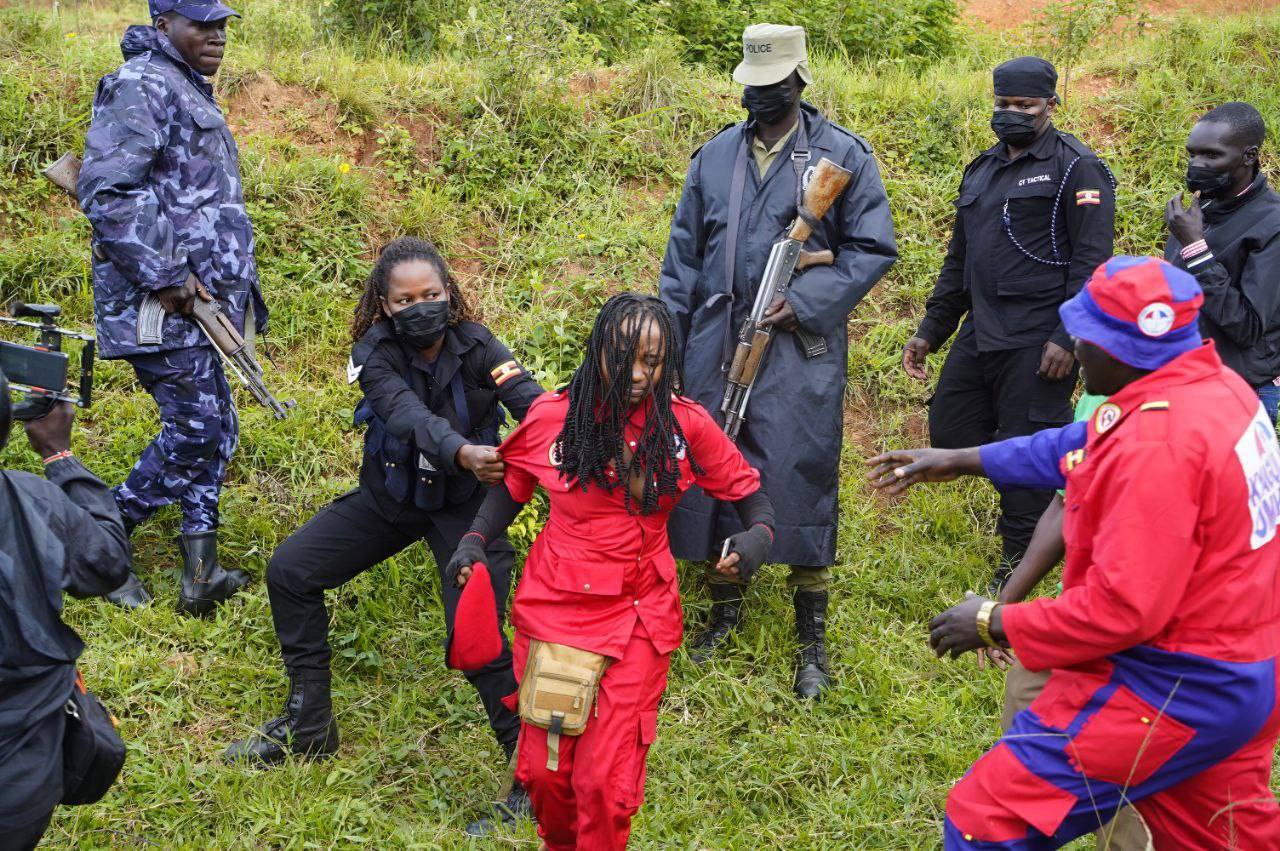
Witnesses describe a night of chaos and fear as Ugandan police stormed hotels and safe houses sheltering opposition leader Bobi Wine’s campaign team — leaving dozens detained, beaten, or missing in a chilling warning to dissenters.
Mbarara, Uganda —
The night was supposed to mark a new phase in Robert Kyagulanyi’s campaign trail. Instead, it turned into a nightmare of sirens, smashed doors, and screams. In the pre-dawn hours of yesterday, Ugandan police and armed officers unleashed a coordinated crackdown on the National Unity Platform (NUP) campaign team, effectively crippling Bobi Wine’s western Uganda operation and throwing the country’s political climate into renewed turmoil.
“They came like shadows in the night — breaking doors, dragging people, taking phones, and shouting orders. It was like a war zone,” recounted one shaken campaign aide who narrowly escaped arrest.
A Coordinated Strike on Dissent
According to eyewitnesses and campaign officials, at least three hotels housing Bobi Wine’s team in Mbarara were raided between 2 a.m. and 4 a.m. Witnesses describe masked officers storming into rooms, confiscating documents, and arresting anyone linked to the opposition movement. By sunrise, several of Bobi Wine’s closest organizers and media personnel had vanished — their whereabouts unknown.
The Uganda Police Force has since defended the raids, claiming the operation targeted individuals suspected of “inciting violence and obstructing law enforcement.” But opposition figures and human rights observers say the arrests are part of a systematic campaign to silence Uganda’s most vocal challenger to President Yoweri Museveni’s decades-long rule.
“This was not law enforcement — it was political warfare,” declared Joel Ssenyonyi, NUP spokesperson. “The regime is terrified of the people’s power, so it sends soldiers to crush it in the dark.”
Broken Dreams and Blocked Rallies
The crackdown derailed a highly anticipated rally in Bwizibwera Town Council, where thousands of supporters had gathered in anticipation of Bobi Wine’s arrival. Instead, the convoy was intercepted, and access roads were blocked by armored vehicles. The opposition leader later condemned the assault on social media, accusing the government of “turning Uganda into a police state.”
Political analysts warn that such violent disruptions could erode what little trust remains in Uganda’s electoral process. With the 2026 elections looming, the pattern of arrests, internet shutdowns, and intimidation tactics paints a grim picture for democracy in the region.
The Human Cost of Resistance
Behind the headlines are ordinary Ugandans — drivers, journalists, students — now trapped between fear and faith. Families of the detained have camped outside police stations, demanding information. Meanwhile, activists and lawyers scramble to locate the missing and secure legal assistance.
“They can arrest bodies, but not ideas,” Bobi Wine wrote defiantly on X (formerly Twitter). “We shall not bow to fear.”
As dawn broke over Mbarara, the dust settled on shattered windows, scattered campaign materials, and a haunting silence. But for Uganda’s embattled opposition, this night of terror may only strengthen their resolve — to keep fighting for the right to speak, assemble, and dream freely.