


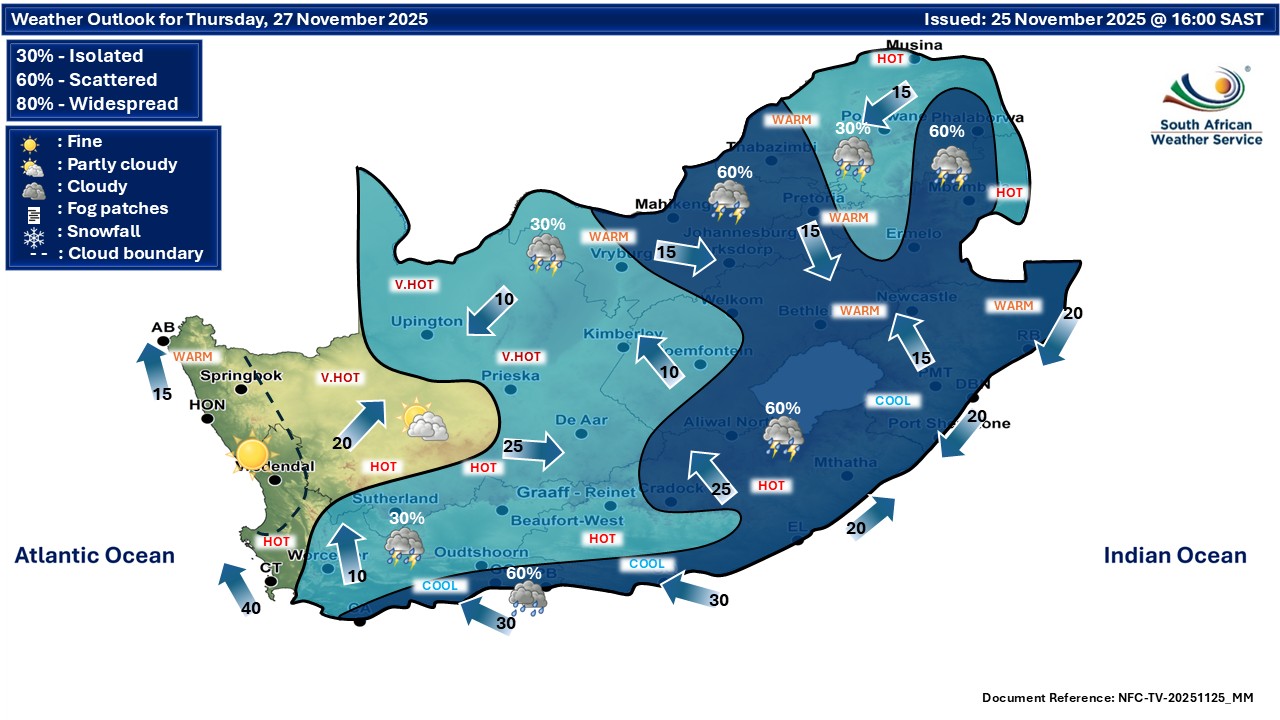
Pretoria, 26 November 2025 — Residents of Pretoria and the greater Tshwane metro have been warned to brace for severe thunderstorms bringing heavy downpours, large hail, frequent lightning and the possibility of localised flooding over the next 24–48 hours. The South African Weather Service (SAWS) has placed parts of Gauteng, including Pretoria, under elevated weather warnings as storm systems sweep across central and northeastern provinces. weathersa.co.za
Forecasters say the system is capable of producing intense, short-duration rainfall that could quickly overwhelm stormwater drains and low-lying streets, leading to flash flooding in informal settlements and along riverine corridors. In addition to deluges, the storms may generate damaging winds and marble-sized hail that can damage vehicles, roofs and outdoor property. IOL
City emergency services and municipal teams have been placed on heightened alert. The City of Tshwane’s Emergency Medical Services and disaster-management units are monitoring the situation and advising residents to avoid unnecessary travel during heavy rainfall, to secure loose outdoor items, and to move vehicles under cover where possible. Authorities have warned that excessive cloud-to-ground lightning will increase the risk of power disruptions and pose a hazard to people caught outdoors. EWN
“Expect sudden, heavy downpours with a real risk of localized flash floods — we’re asking everyone to take basic precautions now,” said a city official.
“If you live in a low-lying area or close to a waterway, prepare to move to higher ground and avoid crossing flooded roads.”
The SAWS bulletin released on Wednesday morning classified some affected areas with Yellow Level 4 and — in pockets where storm intensity is higher — Orange/Level 5 warnings, flagging severe thunderstorm potential with heavy rain, hail and excessive lightning. Residents should keep tuned to weather updates and heed emergency instructions as conditions evolve. weathersa.co.za
Transport and infrastructure impacts are expected. Road- and bridge flooding could cause traffic disruption across arterial routes into and out of the city. Commuters are advised to allow extra travel time, avoid driving through standing water that may conceal potholes or washed-away road surfaces, and to follow traffic and emergency services’ directions. Schools, clinics and businesses that have outdoor activities planned are being advised to postpone or relocate until the threat passes. News24
Utilities and household preparedness: with a heightened lightning threat, power outages are possible in some suburbs. Homeowners should unplug sensitive electronics during storms if safe to do so, secure outdoor electrical appliances, and ensure that emergency kits (torches, batteries, bottled water and first-aid supplies) are accessible. Municipal crews stand ready to respond to fallen trees and storm-related incidents, but residents are urged to call emergency numbers only for life-threatening events to avoid overloading call centres. X (formerly Twitter)
Weather experts emphasise that while not all parts of Pretoria will experience the worst of the storms, severe cells can develop quickly and be highly localised — producing hail in one suburb and clear skies in another within a short distance. People are encouraged to:
• Monitor official SAWS warnings and local media updates. weathersa.co.za
• Avoid walking or driving through floodwater.
• Stay indoors during lightning and keep away from tall isolated structures and trees.
• Report blocked drains or fast-rising water to municipal emergency services.
“Thunderstorms of this nature are unpredictable in their exact path and intensity — the safest approach is to assume the worst and prepare accordingly,” said a meteorologist who monitors Gauteng weather patterns.
“Small decisions now — moving cars under cover, keeping children indoors — can prevent bigger problems later.”
For continuous updates, residents should follow SAWS official channels and local emergency services. If you encounter an immediate danger — rapidly rising water, downed live power lines, or people in distress — contact emergency services on the City of Tshwane’s emergency numbers. Stay safe, avoid risks, and check on neighbours who may need help preparing, particularly the elderly and those in informal settlements. weathersa.co.za
(This report draws on bulletins and warnings from the South African Weather Service and local news outlets issued between 24–26 November 2025.) weathersa.co.za