


The Pearl of Africa News | Special Election Day Report
By The Pearl of Africa News Correspondent
Kampala, Uganda | January 15, 2026
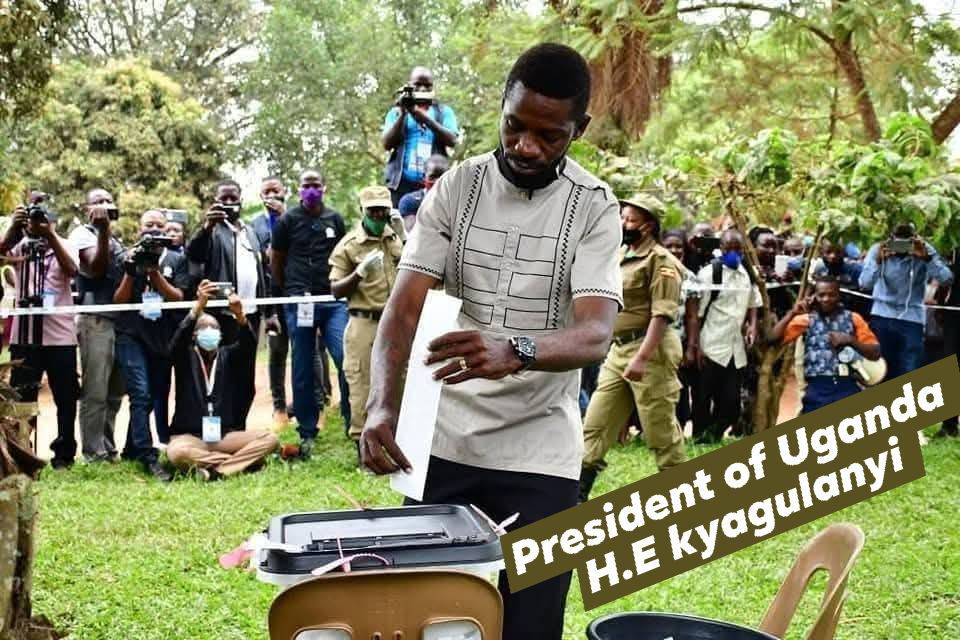
Ugandan opposition leader Robert Kyagulanyi Ssentamu, popularly known as Bobi Wine, has cast his vote in Uganda’s presidential election, marking a pivotal moment in a contest widely described as one of the most consequential in the country’s modern political history. His voting was confirmed early on election day, accompanied by a renewed call for citizens across the country to exercise their democratic right at the ballot box.
The message, circulated among supporters and shared widely on social platforms, stated that Kyagulanyi had “already finished casting his vote,” followed by an appeal urging all eligible voters to turn out and vote for him as President of the Republic of Uganda. The statement struck a tone of urgency and civic responsibility, reflecting both the stakes of the election and the broader political climate in which it is taking place.
A Defining Election Day Moment
Kyagulanyi’s participation in the voting process comes amid heightened political tension, heavy security deployment, and ongoing concerns from civil society groups regarding electoral transparency, digital freedoms, and voter intimidation. Despite these challenges, the act of voting by the National Unity Platform (NUP) leader was framed by his camp as a symbol of resilience and commitment to democratic change.
Pull Quote:
“I have cast my vote. I urge all Ugandans to go out and vote peacefully and courageously for the future of our country.”
Supporters say the call to vote is intended not only to mobilize turnout but also to reassure citizens that participation remains a powerful tool, even in an environment marked by restrictions and uncertainty.
Context of the 2026 Presidential Race
Uganda’s 2026 presidential election has drawn intense local and international scrutiny. The country has experienced repeated election cycles characterized by allegations of irregularities, security crackdowns, and limits on political organizing. In the days leading up to the vote, reports of internet disruptions and restrictions on opposition activities added to the already charged atmosphere.
Kyagulanyi, a former musician turned politician, has emerged as the most prominent challenger to the long-standing ruling establishment. His political message has consistently centered on youth empowerment, economic justice, rule of law, and democratic reform. With Uganda’s population being one of the youngest in the world, his campaign has resonated strongly with first-time voters and urban constituencies.
Pull Quote:
“This election is about restoring dignity, accountability, and the people’s voice in Uganda.”
Calls for Peaceful Participation
Election observers and religious leaders have repeatedly called on Ugandans to remain calm and peaceful throughout the voting and counting process. Kyagulanyi’s message echoed these sentiments, emphasizing nonviolence and lawful participation despite widespread frustration among citizens.
Polling stations across Kampala and other major towns reported steady queues in the morning hours, with voters citing a desire to “be counted” in a moment they view as historic. In rural areas, turnout varied, influenced by transport challenges and the heavy presence of security forces.
The Symbolism of Casting a Vote
For many supporters, Kyagulanyi casting his vote carried symbolic weight. In previous elections, opposition figures have at times been blocked, delayed, or placed under restrictive security measures on voting day. His ability to vote was therefore interpreted by allies as a small but significant assertion of political space.
Analysts note that such moments matter deeply in contested political environments, where optics and symbolism can influence public morale and participation.
Pull Quote:
“When leaders vote alongside the people, it reinforces faith in the democratic process.”
What Comes Next
As voting continues across the country, attention will soon shift to the counting and tallying process, traditionally the most contentious phase of Ugandan elections. Opposition leaders and civil society organizations have urged transparency at polling stations and during the transmission of results.
Kyagulanyi’s camp has encouraged citizens to remain vigilant, document the process where legally permitted, and await official results peacefully. The broader international community is also watching closely, with expectations that the conduct of this election will shape Uganda’s democratic trajectory and global standing.
Whether this election ushers in political change or reinforces the status quo, Kyagulanyi’s early-morning vote and call to action have already secured a place in the narrative of Uganda’s 2026 polls — a moment defined by participation, hope, and the enduring demand for accountable leadership.