


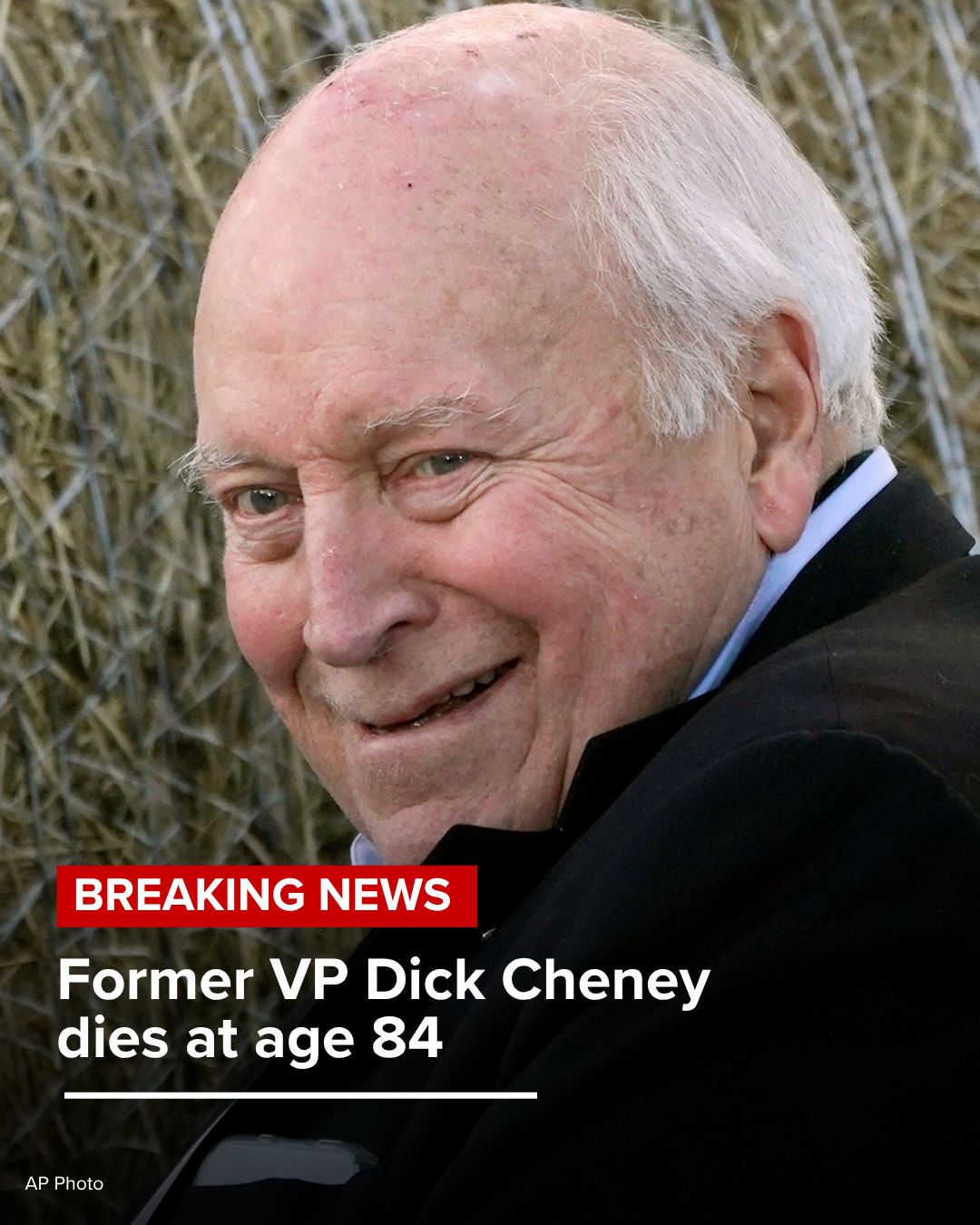
Washington, D.C. | November 5, 2025
Former U.S. Vice President Dick Cheney, one of the most influential and controversial figures in modern American politics, has died at the age of 84. Cheney passed away from complications of pneumonia and long-term cardiac and vascular disease, according to a statement released by his family.
He was surrounded by his wife, Lynne Cheney, and daughters Liz and Mary at the time of his death.
From Wyoming Roots to the Pinnacle of Power
Born on January 30, 1941, in Lincoln, Nebraska, and raised in Casper, Wyoming, Richard Bruce Cheney’s journey from small-town America to the highest levels of U.S. government was marked by determination and political shrewdness.
Cheney served as White House Chief of Staff under President Gerald Ford, Wyoming’s sole member of Congress, and Secretary of Defense under President George H. W. Bush — where he oversaw the U.S. military victory in the 1991 Gulf War.
But it was his tenure as Vice President to George W. Bush (2001–2009) that defined his legacy — transforming what had traditionally been a secondary role into one of unmatched influence over foreign and domestic policy.
“Cheney was arguably the most powerful vice president in U.S. history,” said political analyst Michael Beschloss. “He redefined the office in ways that still shape the White House today.”
Architect of the War on Terror
Following the September 11, 2001 attacks, Cheney emerged as the intellectual force behind the Bush administration’s “War on Terror.” He championed the invasions of Afghanistan and Iraq, expanded intelligence and surveillance operations, and defended the use of “enhanced interrogation techniques” — policies critics later labeled as torture.
To his supporters, Cheney was a resolute defender of American security; to his detractors, a symbol of executive overreach.
“History will judge Dick Cheney as one of the most consequential — and divisive — figures in American politics,” said historian Jon Meacham.
Health Struggles and Political Resilience
Cheney’s political career unfolded despite serious health challenges. He suffered five heart attacks, beginning at age 37, and received a heart transplant in 2012. Even after leaving office, he remained a vocal figure in Republican politics, defending his administration’s record and warning against what he saw as U.S. foreign policy “weakness.”
In his later years, Cheney broke ranks with much of his party, criticizing Donald Trump and publicly supporting his daughter Liz Cheney in her efforts to hold Trump accountable for the January 6, 2021 Capitol attack.
“He was a father who loved fiercely, and a patriot who never stopped believing in the Constitution,” Liz Cheney said in a statement.
A Legacy of Power and Polarization
Tributes poured in from across the political spectrum. Former President George W. Bush praised Cheney as “a man of deep conviction and unshakable loyalty.” Meanwhile, civil liberties advocates and progressives remembered him for policies they argue undermined U.S. credibility and human rights.
Flags at the White House and other federal buildings have been lowered to half-staff in Cheney’s honor. Memorial service details are expected to be announced later this week.
Cheney’s enduring legacy remains one of paradox — a man both admired and condemned, who reshaped the office of the vice presidency and left an indelible mark on American governance.