


Kampala | January 14, 2026
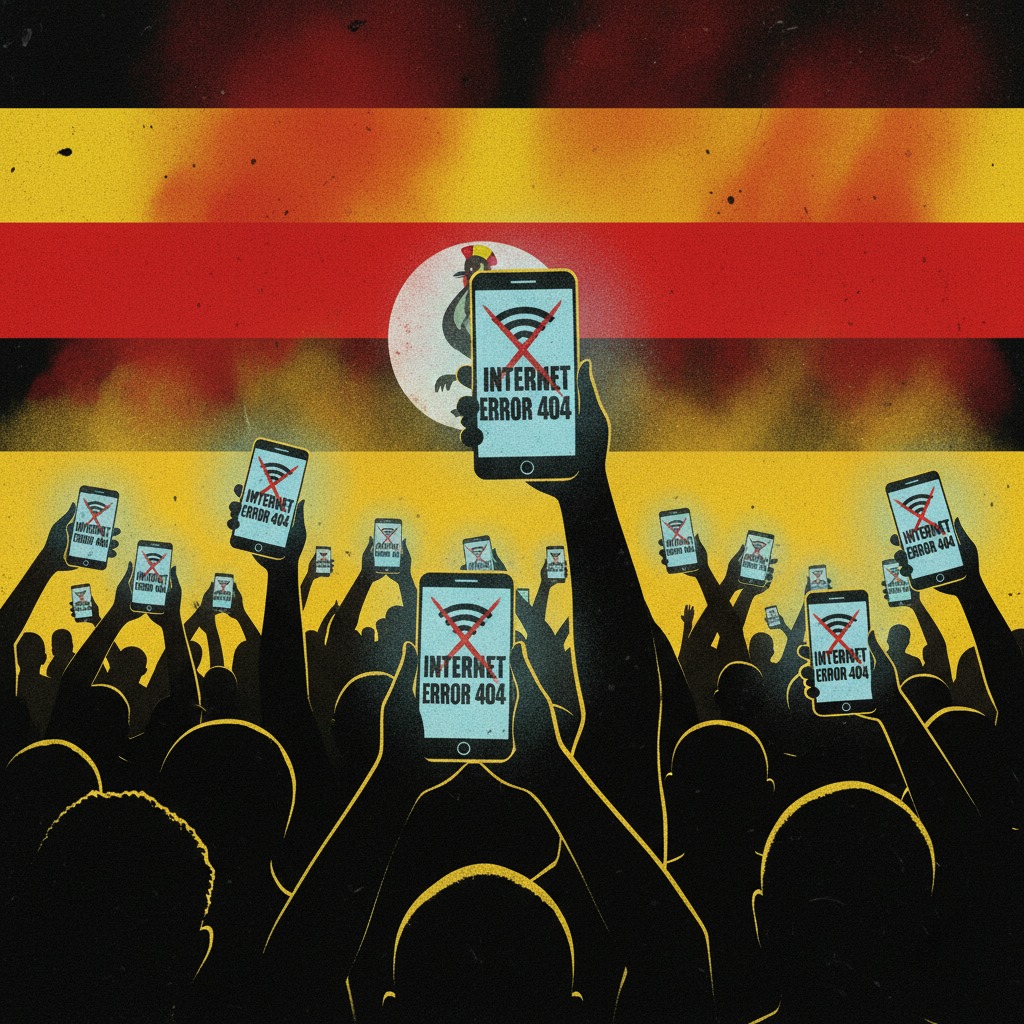
When a government switches off the internet, it is not cables that go silent — it is lives.
Across parts of Africa and beyond, digital shutdowns have increasingly become a tool deployed during elections, protests, or periods of political tension. Often justified in the name of national security or public order, these measures carry consequences far beyond the political arena. They reach into hospitals, homes, classrooms, and markets, disrupting the ordinary rhythms of life in ways that are rarely acknowledged by those who order them.
At the heart of the debate lies a fundamental question: what does responsible sovereignty look like in a digital age?
Pull Quote:
“Power is not the ability to interrupt life at will; power is the discipline to govern without suffocating the people who give it meaning.”
Healthcare Does Not Log Off
Consider the cancer patient awaiting a remote consultation. Their appointment is not political. It is not partisan. It is biological. Disease does not pause for elections. Tumours do not respect curfews. Pain does not log off.
In an era where telemedicine has become a lifeline, especially in countries with limited specialist care, internet shutdowns sever critical access to doctors, test results, pharmacies, and emergency guidance. What is framed as a temporary inconvenience quickly becomes a matter of life and death for the most vulnerable.
Medical professionals warn that even short-term disruptions can delay diagnoses, interrupt treatment schedules, and isolate patients who rely on digital platforms for psychological and emotional support.
Pull Quote:
“Disease does not pause for elections. Tumours do not respect curfews. Pain does not log off.”
An Economy Built on Bandwidth
The impact does not stop at healthcare. Today’s economy is digital by design. For millions of young entrepreneurs, their businesses do not exist in brick-and-mortar buildings but in bandwidth. They pay rent not with slogans, but with clicks, calls, and contracts.
From online traders and digital marketers to freelance designers, ride-hailing drivers, and cross-border exporters, internet access is the backbone of survival. When connectivity is cut, income disappears instantly. Contracts are breached. Trust is lost. Recovery is slow — if it happens at all.
Shutting down the internet does not merely silence dissent. It strangles livelihoods.
Pull Quote:
“When you silence the internet, you do not silence dissent alone — you strangle livelihood.”
Collective Punishment Is Not Order
Governments often argue that shutdowns are necessary to prevent misinformation or unrest. Yet security achieved by paralysing citizens is not security. An order maintained through collective punishment is not order. Authority that fears communication has already confessed weakness.
Digital blackouts do not target criminals alone; they affect students preparing for exams, farmers checking market prices, journalists verifying facts, and families sending remittances. The burden is borne disproportionately by the poor, the sick, and the young — those least able to absorb sudden shocks.
Pull Quote:
“Authority that fears communication has already confessed weakness.”
Governance in the Modern World
A wise state governs with restraint, not reflex. A confident nation protects both stability and continuity of life. Leadership worthy of its name understands that in the modern world, connectivity is no longer a luxury — it is infrastructure.
Just as roads, electricity, and water are considered essential services, internet access has become central to economic participation, public health, and civic engagement. To disrupt it casually is to undermine the very foundations of national development.
International human rights bodies and digital rights advocates have repeatedly warned that blanket internet shutdowns violate freedom of expression, access to information, and economic rights. More importantly, they erode public trust between citizens and the state.
What History Will Record
History will ask difficult questions of this era. Did governments govern with foresight, or did they rule with fear? Did leaders recognise the evolving needs of their societies, or did they cling to blunt instruments of control?
Unlike the internet, history never goes offline. Its record is permanent, and its judgment unsparing.
As nations navigate political transitions and security challenges, the lesson is clear: safeguarding stability should not come at the cost of suffocating life itself. True sovereignty is demonstrated not through shutdowns, but through responsibility, restraint, and respect for the people who give the state its meaning.