


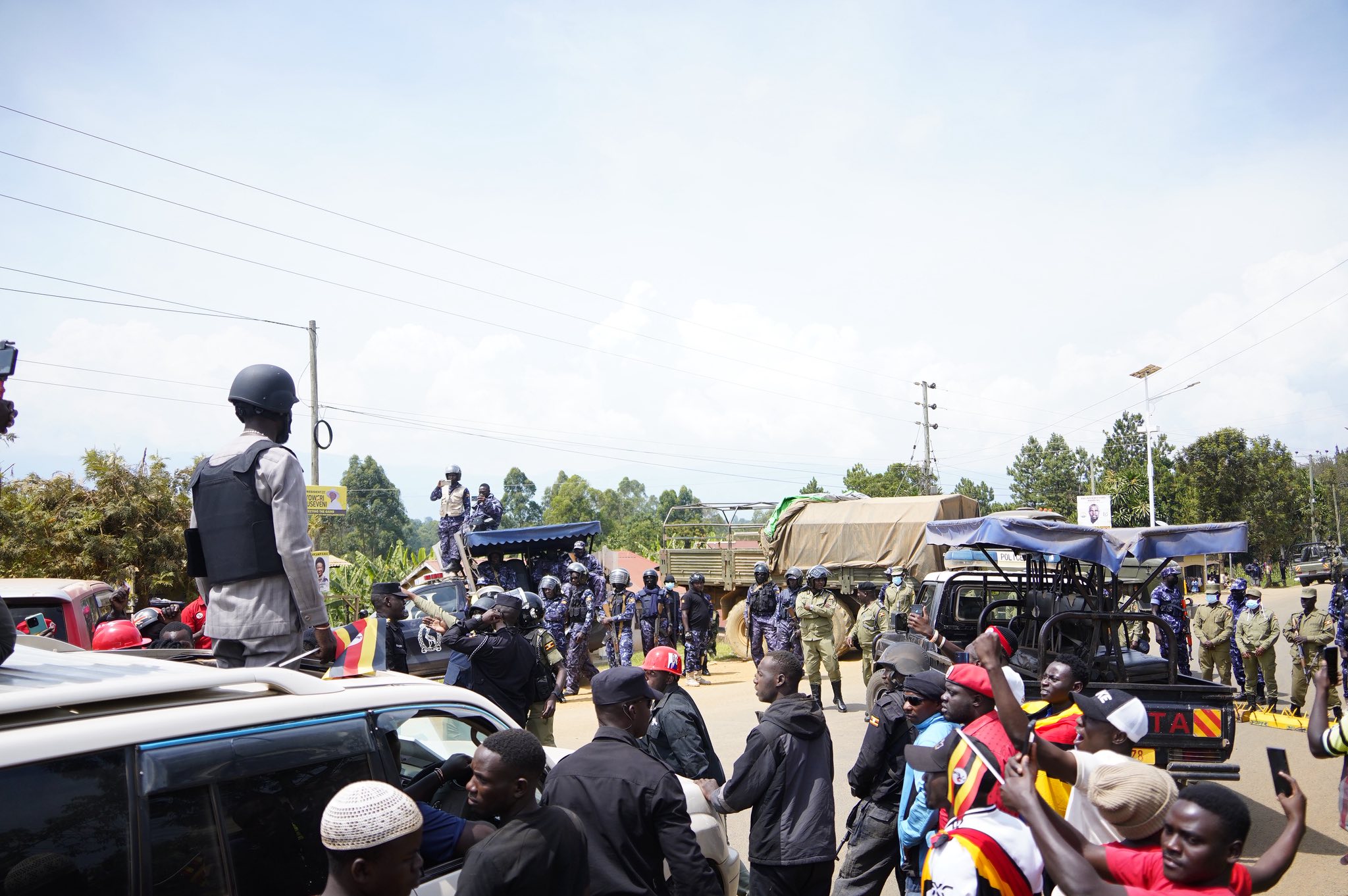
KAMPALA — Uganda’s security forces are once again under the spotlight. This follows sharp accusations from presidential candidate Robert Kyagulanyi Ssentamu, who claims law enforcement agencies are selectively applying campaign regulations in a manner that undermines electoral fairness.
Kyagulanyi, popularly known as Bobi Wine, released a strongly worded statement. He questions why his presidential campaign has faced harsher and more restrictive treatment compared to other candidates. His concerns raise broader questions about the intentions and conduct of the Uganda Police Force and other security organs during the electoral period.
In a message shared publicly, Kyagulanyi asked:
“If all other presidential candidates are using main roads, WHY IS KYAGULANYI BEING DIVERTED TO LONG, DUSTY, VILLAGE ROADS?”
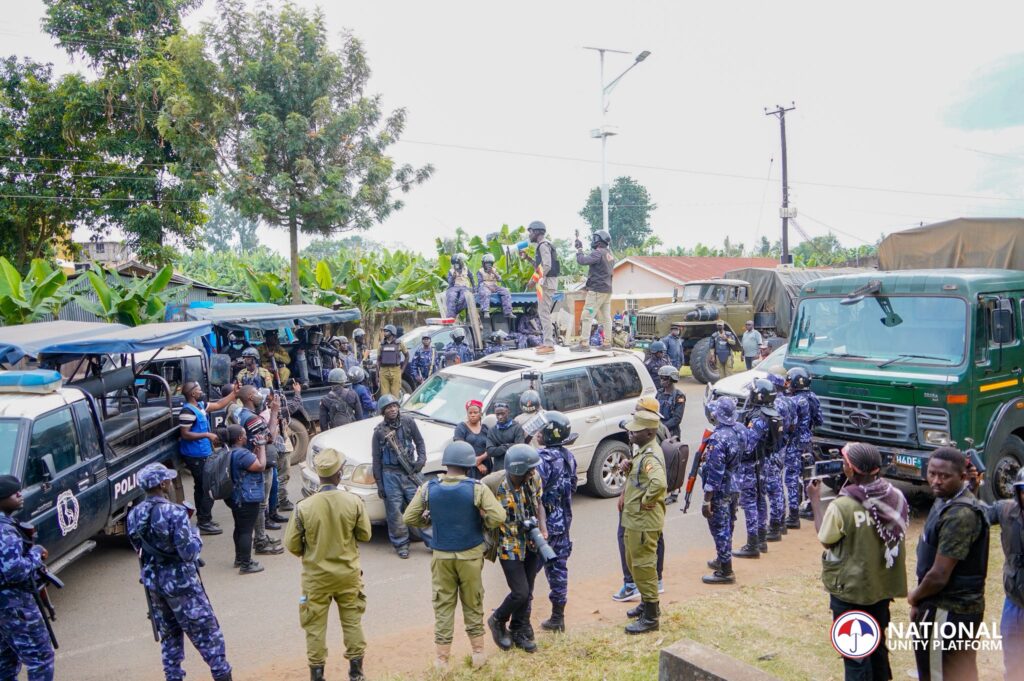
According to his campaign team, police escorts repeatedly diverted his convoy off major highways, allegedly citing “security concerns” and “traffic management.” However, video evidence from other campaign trails shows several candidates — including the incumbent — moving freely through main thoroughfares.
Kyagulanyi further questioned the inconsistent enforcement of public gathering restrictions:
“If all other presidential candidates are making stopovers, waving at supporters and addressing people on the roadside, WHY IS KYAGULANYI PROHIBITED FROM DOING SO?”
While the Electoral Commission (EC) provides guidelines on the regulation of rallies and public gatherings, including COVID-19 era restrictions, critics argue that these rules are being interpreted arbitrarily. Several civil society voices have warned that the unequal application of electoral laws constitutes an abuse of power. This potentially violates both the Electoral Commission Act and constitutional guarantees of equal participation.
Processions: Allowed for Some, Criminalised for Others?
Kyagulanyi also pointed out what he described as a double standard in the policing of campaign processions.
“If Museveni and his criminal enterprise are allowed to hold processions of ferried supporters, WHY IS IT CRIMINAL FOR KYAGULANYI TO HOLD PROCESSIONS?”
On multiple occasions, security forces have dispersed gatherings of Kyagulanyi’s supporters using tear gas and, in some instances, live bullets. Yet public rallies and large processions for ruling party candidates have gone ahead with minimal police interference.
This contrast has generated public debate. The debate centers on whether law enforcement agencies act as neutral implementers of EC guidelines or as political actors.
Legal Experts Raise Alarms
Several constitutional lawyers argue that repeatedly singling out one candidate not only violates electoral regulations. It may also constitute a breach of the principle of equality before the law, which the Electoral Commission is mandated to enforce.
One legal analyst noted that:
“If one candidate is permitted freedom of movement and assembly while another is restrained without transparent justification, the credibility of the electoral environment is undermined.”
Kyagulanyi: “This is a fight about fairness”
In his statement, Kyagulanyi framed his struggle as bigger than his candidacy:
“This is a fight about FAIRNESS, DIGNITY and EQUITY… a fight to restore the rule of law.”
“We shall overcome.”
His remarks reflect deepening tensions between opposition candidates and state security agencies. They continue to defend their actions as necessary for maintaining order.
Lingering Questions for Police and the EC
The events raise pressing questions:
- Why are campaign guidelines enforced unevenly across candidates?
- Is the police’s interpretation of EC regulations consistent with the law?
- Are the restrictions on Kyagulanyi rooted in legitimate security concerns, or do they indicate politically motivated interference?
As Uganda approaches the climax of the campaign season, these questions will remain central. They are key to evaluating whether the electoral process can be seen as free, fair, and credible.