


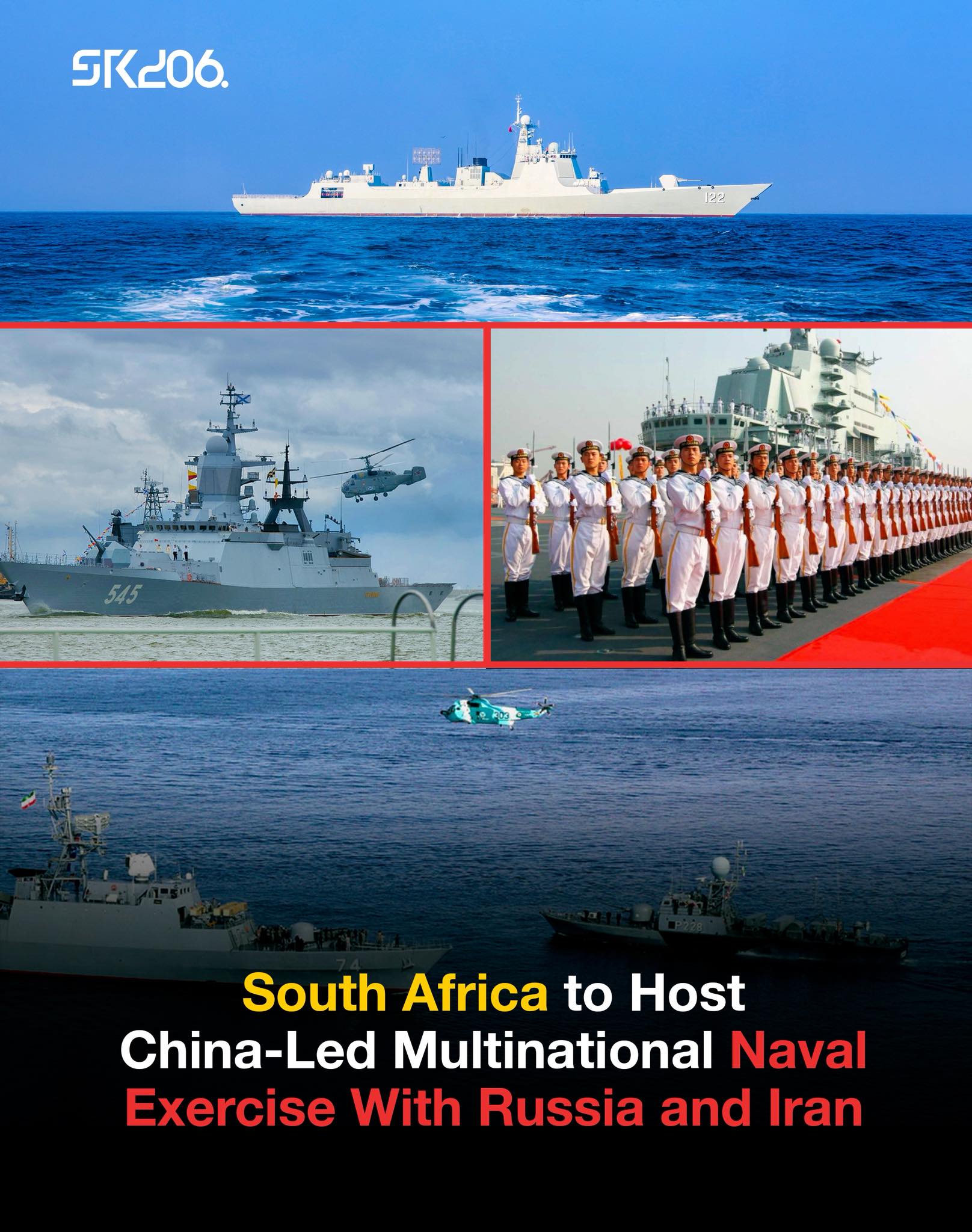
Date: 10 January 2026
By: The Pearl of Africa News Correspondent
South Africa has entered a new chapter in its maritime and diplomatic engagements. It hosts Exercise Will for Peace 2026, a multinational naval drill in the country’s territorial waters from 9 to 16 January 2026. Notably, South Africa hosts China-led BRICS Plus naval exercise 2026. The exercise, now led by China, brings together naval forces from several “BRICS Plus” countries. They engage in joint operations focused on maritime safety, interoperability and protection of sea lanes.
According to the South African National Defence Force (SANDF), the exercise is designed to enhance cooperation. This is achieved through coordinated sea drills, communication exercises and maritime security simulations. However, as warships from China, Russia and Iran operate off South Africa’s coast, the exercise has sparked renewed debate. South Africa hosts China-led BRICS Plus naval exercise 2026, raising concerns about transparency and accountability in Pretoria’s broader foreign policy direction.
“Exercise Will for Peace is presented as a technical maritime drill, but its strategic symbolism is hard to ignore,” a defence analyst told The Pearl of Africa News.
Powerful Naval Assets in South African Waters
Naval vessels already linked to the exercise underscore its scale and geopolitical weight. China has deployed the Type 052DL guided-missile destroyer Tangshan. It is alongside the Type 903A replenishment ship Taihu, both symbols of Beijing’s expanding blue-water navy. Russia’s presence includes the Steregushchiy-class corvette Stoykiy, supported by a Ka-27 helicopter, and the oiler Yelnya. Meanwhile, Iran’s 103rd naval flotilla has also been confirmed as a participant.
The Russian vessels have made port calls along Africa’s west coast in recent weeks. They are expected to continue such visits after the exercise concludes. This would further extend Moscow’s naval footprint on the continent.
“The composition of the fleet tells a story beyond maritime safety,” said one regional security observer. “These are not symbolic deployments; they are capable platforms with clear strategic value.”
Limited Disclosure Raises Concern
Despite the scale of the exercise, operational details remain limited. The SANDF has not publicly disclosed the location of the exercise headquarters. Additionally, the number of South African personnel involved in South Africa hosting China-led BRICS Plus naval exercise 2026 and the financial cost to the state remain undisclosed. There has also been no confirmation on whether any parts of the exercise will be open to public observation.
Members of Parliament have yet to receive a comprehensive briefing. This has prompted concern among opposition parties and civil society groups. They argue that such international military engagements require greater oversight.
“Parliament cannot be sidelined when it comes to multinational military operations in our waters,” one lawmaker said. “South Africans deserve clarity on command structures, costs and diplomatic consequences.”
BRICS Label Questioned
Another point of contention is the absence of India and Brazil, both core members of the BRICS bloc. Their non-participation has led some analysts to question the accuracy of the “BRICS Plus” label. They wonder whether the exercise reflects a narrower alignment rather than a truly multilateral initiative.
While China and Russia have framed the exercise as inclusive and cooperative, critics argue otherwise. The selective participation raises questions about internal divisions within BRICS and highlights South Africa’s role since it hosts China-led BRICS Plus naval exercise 2026. South Africa must navigate those dynamics.
“If this is a BRICS exercise, why are two founding members missing?” asked a Pretoria-based foreign policy expert. “That absence changes the political meaning of the event.”
Diplomatic and Strategic Implications
Exercise Will for Peace 2026 comes at a sensitive time for South Africa. The country has sought to balance its historic non-aligned posture with deepening ties to emerging powers. The involvement of Russia and Iran adds complexity. Both countries face varying degrees of international sanctions and diplomatic isolation. This complicates Pretoria’s efforts to maintain relations with Western partners while asserting strategic autonomy.
Government officials have insisted that South Africa’s participation does not signal alignment with any single bloc. They emphasize the country’s commitment to dialogue, peace and maritime security.
“South Africa engages with all partners in the interest of regional stability and global cooperation,” an official statement said.
A Signal Beyond the Seas
As warships maneuver in South African waters, the exercise has become more than a naval drill. South Africa hosting the China-led BRICS Plus naval exercise 2026 is being closely watched as a barometer of South Africa’s evolving foreign policy posture and its interpretation of BRICS cooperation. Additionally, it’s a measure of the country’s willingness to engage openly with the public on sensitive defence matters.
Whether Exercise Will for Peace 2026 strengthens maritime cooperation or deepens scrutiny depends on two factors. Not only on what happens at sea, but also on how transparently South Africa navigates the political waters at home.