


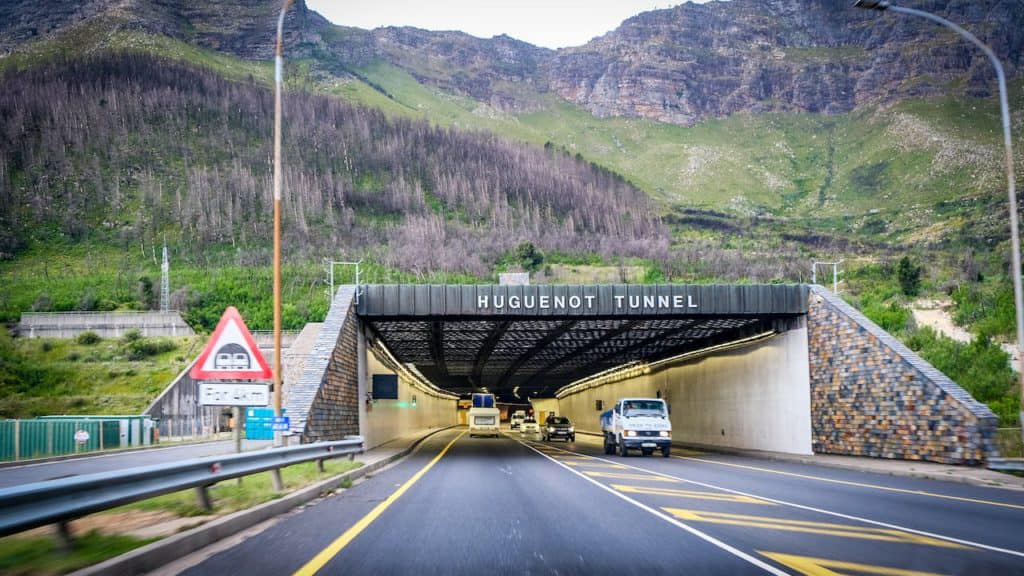
Beneath the grim, jagged ridges of the Du Toitskloof mountains, something extraordinary hums day and night — a tunnel so bold, so daring, and so transformative that it reshaped South Africa’s national road network forever. The Huguenot Tunnel, stretching an astonishing 3.9 kilometres, is not just a passage through rock. It is a triumph of human engineering and the longest road tunnel on the African continent.
When it officially opened in March 1988, it didn’t just break mountains — it broke history. Remarkably, the Huguenot Tunnel made travel much safer and more efficient.
A Treacherous Pass, A Deadly Legacy
Before this engineering giant existed, motorists were forced to confront the unforgiving twists and steep drops of the Du Toitskloof Pass. The pass was stunning, yes — postcard-worthy even — but beauty came with a price:
icy winters, sudden fog, and sharp bends that turned simple travel into a perilous gamble.
“The mountain showed no mercy — but engineering did.”
Truckers dreaded it. Families feared it. Accidents were common. Time was lost. Lives were lost. Constructing the Huguenot Tunnel was a game-changer.
Something had to change.
A Tunnel Born From Bold Vision
And so the idea emerged: carve a massive, modern tunnel directly through the mountains, linking Paarl and Worcester, trimming a full 11km off the journey, and shaving 15–26 minutes off travel time.
Impossible? Some said yes. Engineers said no.
What followed was years of blasting, drilling, reinforcing, and relentless precision. Granite gave way to steel and determination. The N1 would finally flow straight through the mountain rather than over it.
And when the tunnel opened, South Africa’s transport map changed forever. The completion of the Huguenot Tunnel stood as a testament to the power of human vision.
A Beating Artery Serving 12,000+ Vehicles Daily
Today, the Huguenot Tunnel is more than a hollow in the mountain — it is a highway powerhouse, carrying over 12,000 vehicles per day, connecting Cape Town’s beating commercial heart to the vast interior of the country.
Inside, the glow of evenly spaced lights creates a futuristic corridor. Engines echo off the walls. Seconds stretch differently. And then, suddenly — daylight again. A valley. Vineyards. Freedom. Remarkably, the Huguenot Tunnel expedites journeys across these beautiful landscapes.
It is a journey that once felt dangerous that now feels effortless.
“In 3.9km, the tunnel replaces fear with flow, danger with speed, and distance with connection.”
The Tunnel That Keeps the Country Moving
The Huguenot Tunnel is not simply infrastructure.
It is a symbol of progress, a lifeline of commerce, and an icon of South African engineering excellence.
Decades later, it stands unshaken — a reminder that mountains are not obstacles, just invitations for innovation. Clearly, the legacy of the Huguenot Tunnel continues to inspire.