


By Health Coach & Wellness Correspondent
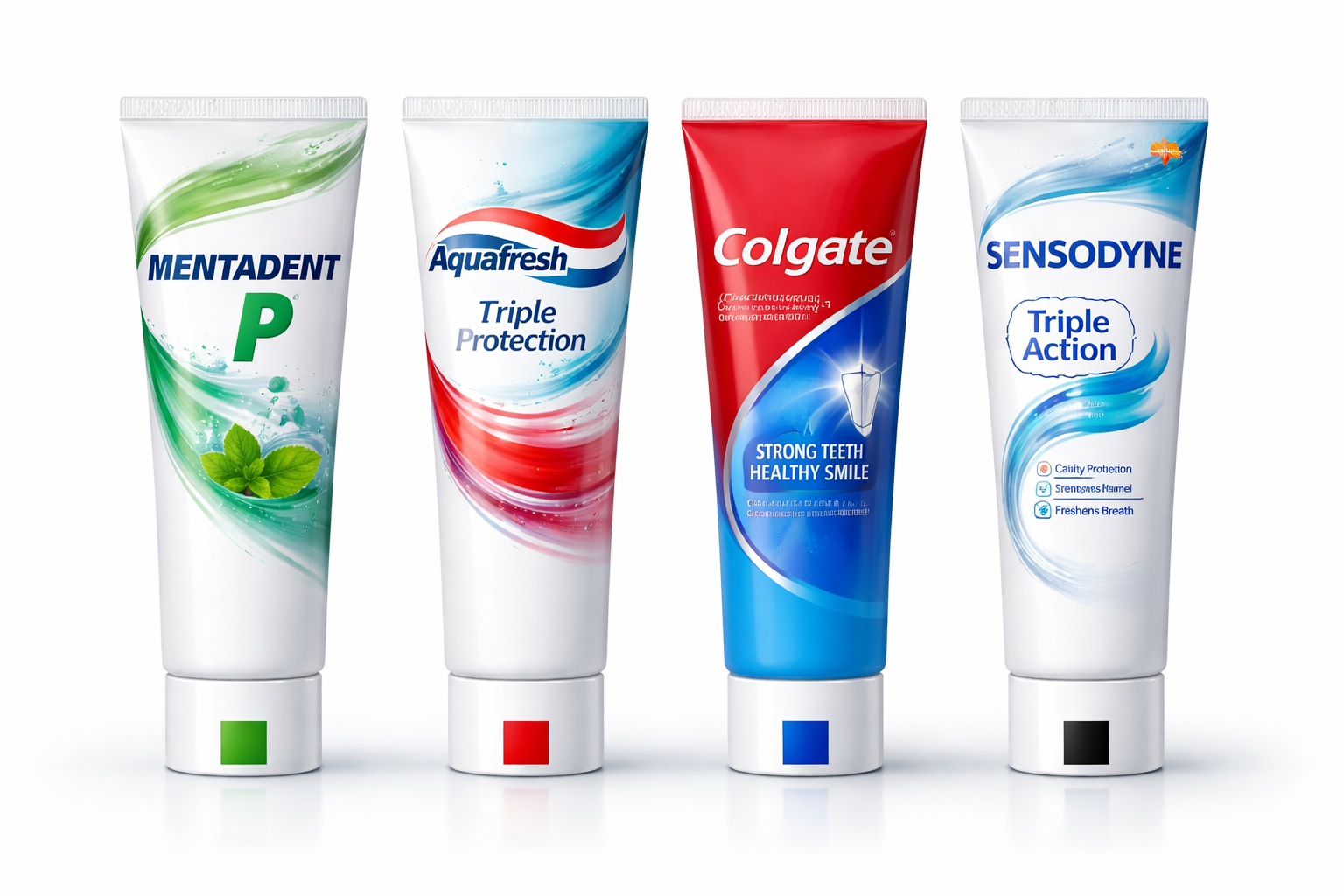
Every morning, millions of South Africans reach for a tube of toothpaste — but most don’t give a second thought to the tiny colored square at the tube’s base. Social media and viral posts constantly tell us that a green line means natural toothpaste, or that a black stripe equals “all chemicals.” As a health coach and lifestyle writer, I dug into what reputable sources and industry experts say — and the truth might surprise you.
The Colour Mark Myth: What Those Tiny Squares Don’t Mean
Across platforms like Facebook, WhatsApp and TikTok, a persistent claim insists that coloured markers on toothpaste tubes encode the product’s ingredients:
“Green = all natural;
Blue = natural + medicine;
Red = natural + chemical;
Black = purely chemical.”
This version of the theory has made the rounds in Africa and beyond, but it’s completely false.
According to packaging and oral care experts, these color marks are not ingredient flags — they’re “eye marks” or “colour marks” used during manufacturing to guide automated machinery. Misbar+1
One fact-checking website explained that these tiny rectangles help sensors “identify where to cut, fold or seal the packaging during high-speed production runs.” These markers ensure precision, reducing defects and waste. Radarr Africa
As the Africa Check team put it, “the coloured blocks don’t indicate your toothpaste’s ingredients.” Africa Check
Another packaging engineer quoted by AFP reiterated this point, noting the colour is chosen based on contrast and machine visibility, not the product formula. RTL Today
So if you’re picking toothpaste because of the bottom stripe, you’re reading the wrong signs.
What Does Matter: Toothpaste Ingredients and Labels
If you want to assess whether a toothpaste is herbal, fluoride-rich, or clinically targeted to sensitivity, you must read the actual ingredient list on the packaging.
Dental professionals consistently point out that all matter — even plant extracts — consists of chemical compounds. In other words, calling something “all chemical” simply because it contains fluoride or preservatives is scientifically misleading. Africa Check
For example, most common toothpaste formulas include:
- Abrasives (e.g., calcium carbonate) to clean and polish teeth
- Humectants (like glycerin) to retain moisture
- Fluoride for cavity prevention
- Detergents like sodium lauryl sulfate to create foam
These are standard across mainstream brands, whether you buy Colgate, Aquafresh, Pepsodent, or artisanal herbal blends. Misbar
Spotlight on Toothpaste Brands
South African shelves and pharmacies carry a range of oral care products from global and local manufacturers, each with distinct branding and formulations:
- Colgate: A leading oral-care brand that has even introduced 100% recyclable tubes and a “Naturals” range containing aloe and hemp seed oil variants. These sustainability innovations illustrate that brands are evolving their packaging for environmental reasons — not ingredient signalling via colour marks. Cape Business News
- Aquafresh: Known for its iconic red-white-blue stripes, Aquafresh has been a global staple for decades. The internal colour swirls and exterior stripes relate chiefly to brand identity and flavour profiles, not to intuitive ingredient codings. Wikipedia
- Pepsodent: A globally recognised toothpaste brand sold in many markets outside North America, emphasising fresh breath and whitening. Wikipedia
- Elmex: A brand with a long history of engineered fluoride chemistry, first to introduce amine fluoride as an active ingredient. Wikipedia
Other brands like Macleans and regional products from Jordan Oral Care also offer fluoride and herbal varieties designed to appeal to different oral-care needs. Wikipedia+1
Why the Myth Persists — And What You Should Do
The toothpaste colour code myth is so widespread because it sounds plausible and simple. People tend to look for quick visual cues when comparing products — and a coloured marking is right in front of their eyes. But as industry experts note, these marks serve mechanical functions during printing and packaging, not ingredient classification. Misbar
Pull Quote:
“Toothpaste colour marks don’t reveal ingredient content — they help packaging machines detect where to cut and seal the tube.” — Packaging expert commentary
As a health coach, my advice is simple:
- Ignore the coloured line — it’s a packaging artifact, not a code for quality.
- Read the ingredient list — that reveals what’s truly inside your toothpaste.
- Look for seals and certifications — such as fluoride content or dental association approvals.
Choosing toothpaste should be about oral health impact, not colour speculation.
Final Word
In a world awash with misinformation, it helps to separate fact from folklore. When it comes to toothpaste, the only meaningful markers are those printed clearly in the ingredient panel — not the tiny coloured line at the bottom. Your smile deserves nothing less than clarity. 🦷✨