


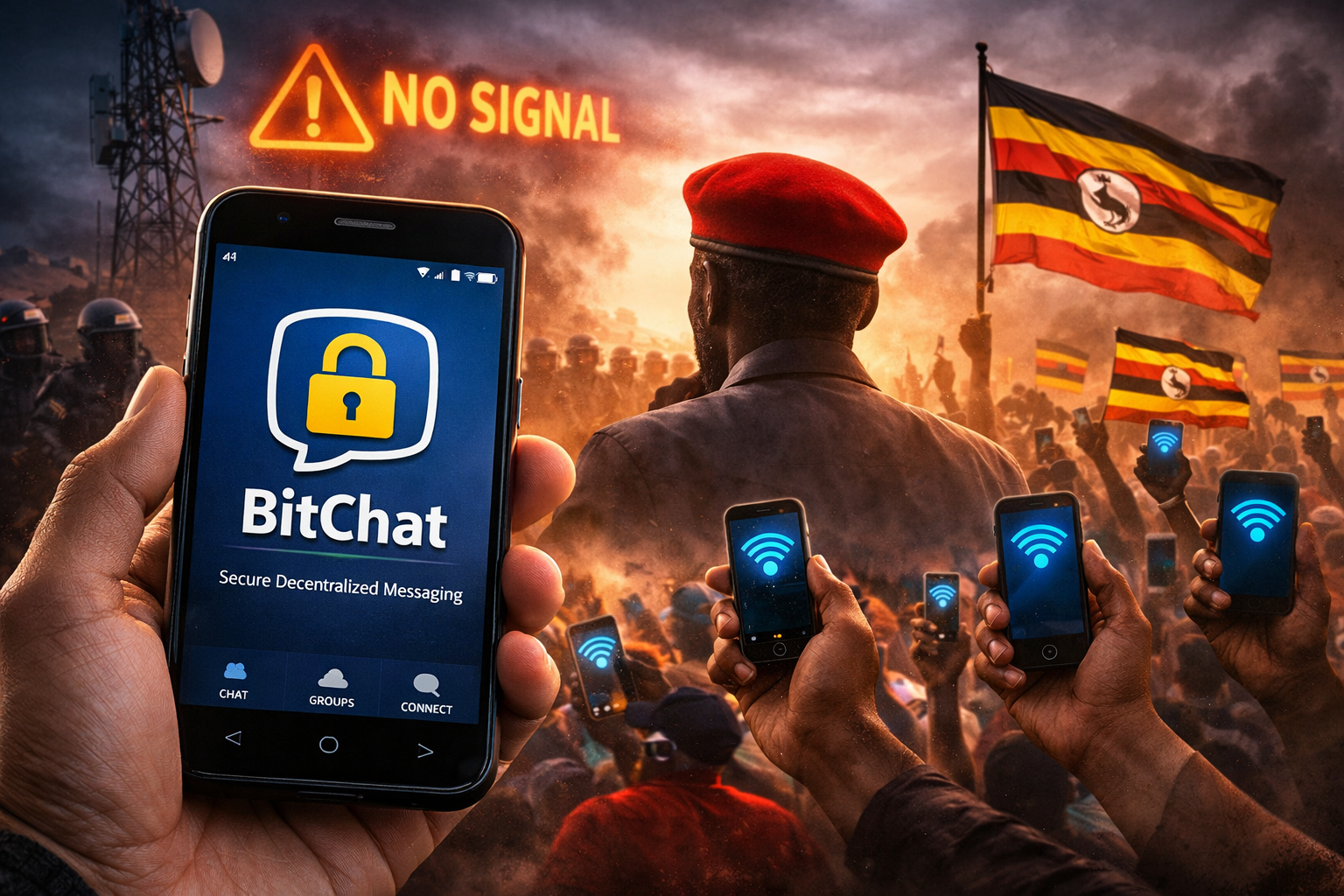
Date: January 3, 2026: In a recent turn of events, Uganda Opposition promotes Bitchat amid internet blackout fears, highlighting ongoing concerns about digital communication access in the country.
By The Pearl of Africa News Reporter
KAMPALA — Uganda’s political landscape has taken a sharply digital turn after opposition leader Robert Kyagulanyi Ssentamu, popularly known as Bobi Wine, urged citizens to download and use the decentralized messaging application Bitchat, citing fears of a possible internet blackout as the country approaches the January 15, 2026 general elections.
The call, made in late December 2025 and reinforced in the first days of the new year, has triggered intense national debate, renewed memories of past election shutdowns, and a rapid surge in public interest around alternative communication technologies. For many Ugandans, the message struck a familiar chord: prepare for limited connectivity during a critical democratic moment.
Pull Quote:
“We must prepare ourselves. Communication is our lifeline, and we cannot afford to be silenced again,” Bobi Wine told supporters in a public address.
Fear Rooted in History
Uganda has a documented history of restricting internet access during election periods. In previous election cycles, social media platforms were blocked and internet services disrupted nationwide, a move authorities defended as necessary for national security. Critics, however, argue such measures disproportionately affect opposition mobilisation, election monitoring, and the free flow of information.
With political tensions already high and security deployments increasing across the country, fears of a repeat scenario have intensified. Civil society groups, journalists, and opposition supporters say the uncertainty surrounding internet access has forced citizens to think creatively about staying connected.
It is within this context that Bitchat has emerged as a symbol of digital preparedness.
What Is Bitchat?
Bitchat is a decentralized, peer-to-peer messaging application that allows users to communicate without relying on traditional internet infrastructure. Instead, it uses Bluetooth-based mesh networking, enabling phones to pass messages from one device to another within proximity.
Unlike mainstream messaging platforms, Bitchat does not require phone numbers, central servers, or continuous internet connectivity. Messages are encrypted and can hop across multiple devices, making it particularly attractive in environments where connectivity is unreliable or intentionally disrupted.
Pull Quote:
“This is not about politics alone; it is about protecting our right to communicate,” an opposition digital strategist said.
A Rapid Surge in Adoption
Since Bobi Wine’s announcement, interest in Bitchat has risen sharply across Uganda. Data compiled from app distribution platforms and independent analytics groups indicate a dramatic spike in downloads and registrations.
According to aggregated estimates:
- More than 900,000 total registrations have been recorded globally since the app’s launch.
- Over 30,000 new registrations were added within the week following Bobi Wine’s announcement.
- Uganda accounted for an estimated 35–40% of new sign-ups during that period.
- Daily downloads peaked at over 4,000 new users per day, compared to fewer than 500 previously.
These figures suggest that the opposition leader’s message resonated widely, especially among urban youth, election observers, and politically active communities.
Pull Quote:
“People are downloading it not because they love technology, but because they fear silence,” said a Kampala-based civic activist.
Political and Security Reactions
Government officials have not directly addressed Bobi Wine’s call to use Bitchat, but security agencies have repeatedly warned against what they describe as “misuse of digital platforms” to incite unrest. Authorities maintain that any communication restrictions, if imposed, would be temporary and aimed at preserving public order.
However, political analysts say the growing popularity of decentralized apps highlights a widening trust gap between the state and citizens.
“When people prepare for blackouts before they happen, it shows deep anxiety about governance and transparency,” noted a political analyst at Makerere University.
The debate has also raised questions about regulation. Because Bitchat does not rely on centralized servers, regulating or blocking it presents a significant challenge for authorities accustomed to controlling internet gateways.
Technology as a Political Tool
Beyond the immediate election concerns, Bobi Wine’s endorsement of Bitchat reflects a broader global trend where opposition movements increasingly turn to decentralized technology to bypass censorship. Similar tools have been used during protests and elections in parts of Africa, Asia, and Eastern Europe.
Supporters argue such platforms empower citizens to document events, share results forms, and coordinate peacefully even under restrictive conditions. Critics counter that unregulated communication tools could spread misinformation if not responsibly used.
Looking Ahead
As election day draws closer, the conversation around Bitchat has become about more than just an app. It has evolved into a symbol of resistance, preparedness, and the ongoing struggle over information control in Uganda’s democracy.
Whether or not an internet blackout materialises, the surge in Bitchat registrations has already sent a powerful message: many Ugandans no longer trust that digital access will be guaranteed during moments of political significance.
Final Pull Quote:
“A free election requires free communication,” Bobi Wine declared.
In the days ahead, the true test may not only be at the ballot box, but also in the invisible digital networks citizens are quietly building to ensure their voices are heard.