


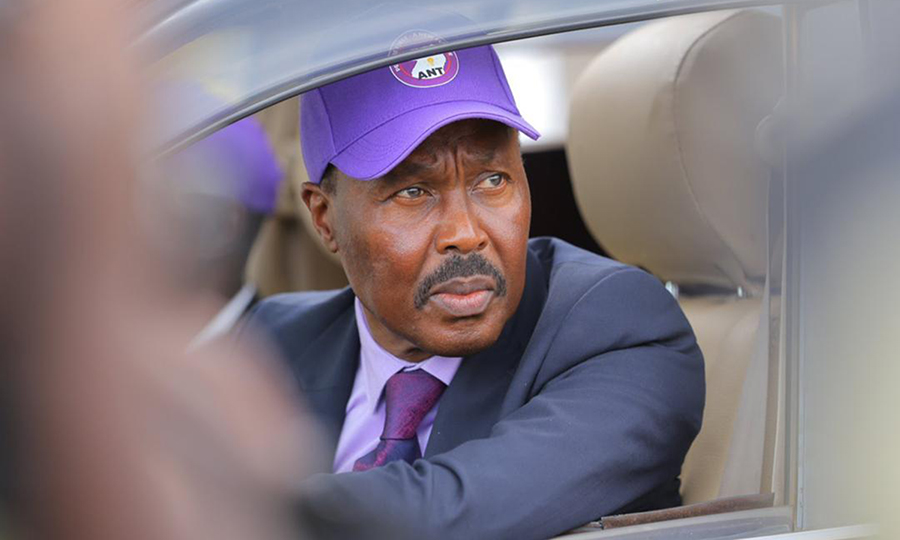
ANT leader Mugisha Muntu assures Ugandans that the country will not descend into chaos after Museveni leaves power, citing strong institutions.
Kampala, Uganda — Alliance for National Transformation (ANT) presidential candidate Mugisha Muntu has moved to reassure Ugandans that the country will remain stable and peaceful even after President Yoweri Museveni eventually leaves power. He challenges long-held narratives that Uganda’s future is inseparable from the current leadership.
Speaking during a public engagement, Muntu dismissed fears that a transition of power would plunge the country into disorder. He described such claims as politically motivated and intended to instill fear among citizens. He stressed that Uganda’s stability should not be dependent on one individual, regardless of how long they have ruled.
“Uganda is not owned by any single person,” Muntu said. “It is a nation of more than 45 million people with the capacity, experience, and structures to govern itself peacefully. Change does not automatically mean chaos.”
Muntu, a former army commander and seasoned politician, argued that countries collapse not because leaders leave office. Instead, collapses occur because institutions are deliberately weakened over time. According to him, Uganda’s greatest challenge is not leadership transition itself but the erosion of independent institutions that should guarantee continuity, accountability, and the rule of law.
He emphasized that a peaceful Uganda political transition after Museveni would require respect for the Constitution, professional security services, and a judiciary free from political interference. Muntu noted that when institutions function properly, leadership change becomes a normal democratic process rather than a national crisis.
The ANT leader also called on Ugandans to reject fear-based politics. He urged that they demand reforms prioritizing national interests over personal power. He urged political actors, civil servants, and security agencies to see themselves as servants of the nation rather than defenders of individuals.
“Stability comes from systems, not personalities,” Muntu said. “If we build strong systems, Uganda will remain stable long after any leader leaves office.”
Political analysts say Muntu’s remarks directly challenge a long-standing government narrative. This narrative suggests that President Museveni’s continued rule is necessary to prevent instability. This has often been used to justify extended terms in office and the removal of constitutional safeguards such as presidential term limits.
Observers note that several African countries have undergone peaceful transitions after long-serving leaders stepped down. This proves that change does not inevitably lead to violence. Muntu cited these examples as evidence. He believes Uganda, too, can navigate a post-Museveni era without chaos if democratic principles are upheld.
As Uganda prepares for future elections, debates around leadership succession and governance reforms are expected to intensify. Muntu’s message appears aimed at reassuring voters. He assures them that a future without Museveni is not something to fear, but an opportunity to strengthen democracy and national unity.
With growing public discourse around the Uganda political transition after Museveni, Muntu’s stance adds to the opposition’s call. They advocate for institutional reform, accountability, and a peaceful transfer of power anchored in the will of the people.