


By Mbalire Brian Kisuule ll
(Your Daily Friend)
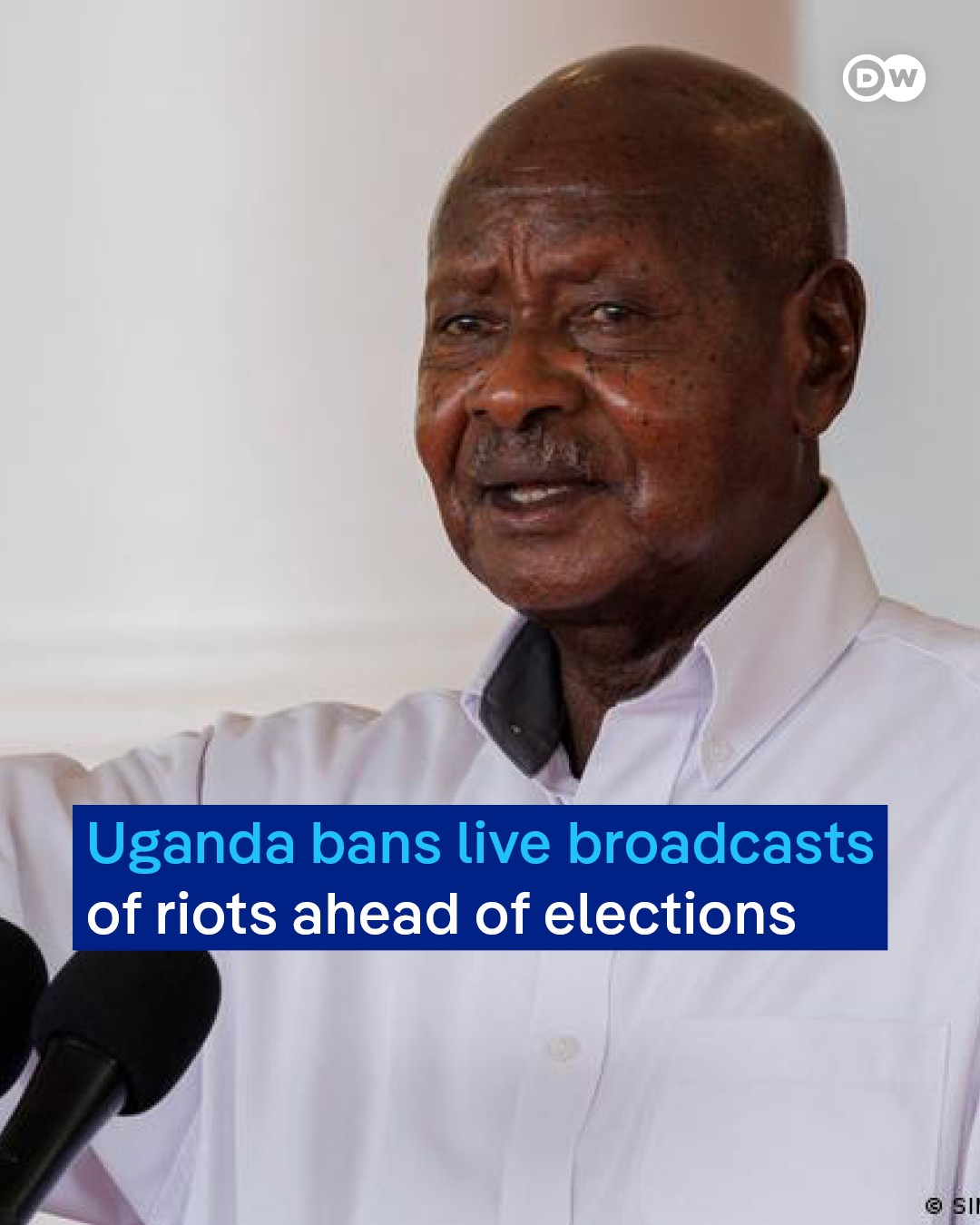
Ugandan authorities have banned live coverage of riots and what they call unlawful processions ahead of elections later this month, citing concerns about public order. Critics say this move further tightens control over the media and political expression. Swine leader Yoweri Museveni seeks to extend his long rule. The extent to which Ugandan authorities have banned live coverage of riots impacts journalists significantly.
Museveni has been in power for 39 years after taking control in 1986. Over the years, elections in Uganda have been marked by violence and intimidation. Many people believe elections are only held to legitimize his continued stay in power.
In the past, Museveni called former Ugandan leaders Idi Amin and Milton Obote “swines” because they refused to leave power. Today, Museveni himself has ruled with an iron fist for 39 years. This makes him no different. For this reason, when we refer to him as a “swine leader,” we are borrowing his own words. These words are used by The Pearl of Africa News. We do not expect Museveni to be offended by language he once used on others.
There are no free and fair elections in Uganda. Museveni, with the help of his son Muhoozi Kainerugaba, is accused of using security forces to kill, arrest, and torture supporters of his main challenger, Kyagulanyi Ssentamu Robert, aka Bobi Wine. Those who survive are arrested and tortured. They are later charged in court with ridiculous crimes.
People who gather to listen to Bobi Wine are often tear-gassed by the military. The military is under the command of Museveni’s son. Videos showing soldiers beating citizens in broad daylight are now widely shared on the internet. Because these videos expose the regime’s brutal actions, the government has decided to criminalize live broadcasts during rallies. The breadth of how Ugandan authorities have banned live coverage of riots is shown by the case of Mr. Muvawala, a Ugandan-American, who was the first victim of this illegal ban.
As election day draws near, this ban on live broadcasts has frightened journalists and members of the fourth estate. It is clearly meant to violate their rights and prevent them from doing their work professionally. While Kyagulanyi was campaigning in Kapchorwa District in Eastern Uganda, a BBS journalist was attacked by the military while on duty. He was beaten, strangled, and his camera was destroyed.
These actions show what may happen on election day when Museveni rigs the votes. Citizens may try to protest peacefully. Human rights activist Dr. Sarah Bireete, Director of the Centre for Constitutional Governance, has been arrested and charged with laughable offenses. Religious leaders are also being silenced. Outspoken preachers like Fr. Deus Ssekatawa are facing fabricated cases.
Although live broadcasts are banned at opposition rallies, Museveni’s rallies are allowed to be broadcast freely. This ban only applies to the opposition. Museveni fears competition because Kyagulanyi’s campaign has overshadowed his campaign. Videos of Bobi Wine’s massive rallies are all over the internet, while Museveni struggles for visibility. Therefore, it’s evident why Ugandan authorities have banned live coverage of riots.
Despite torture, arrests, and killings, young Ugandans are not afraid. They believe a protest vote is the solution, and they say 2026 is their 1986.