


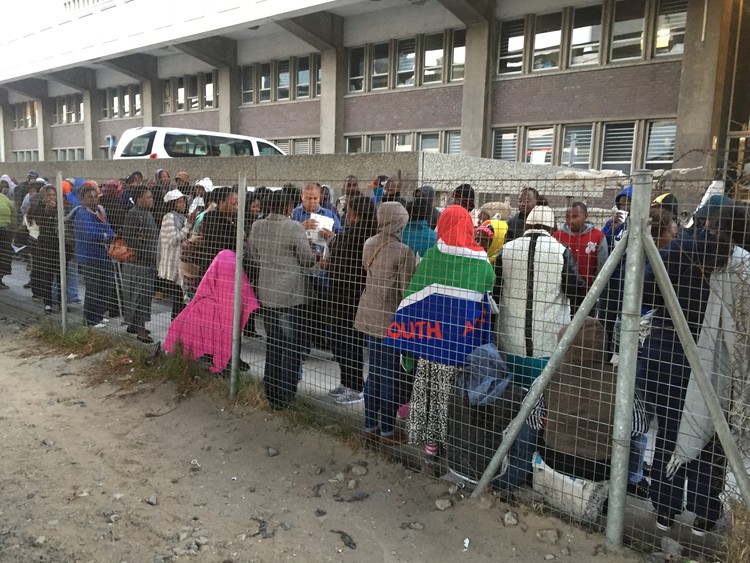
This explainer breaks down the recent Western Cape High Court refugee ruling, which found certain provisions unconstitutional. It covers what legal principles were at stake and how the ruling reshapes the state’s obligations toward asylum seekers.
The Western Cape High Court’s decision to strike down several provisions of the Refugees Act and its accompanying regulations marks a major reaffirmation of constitutional protections for asylum seekers and the procedural integrity of South Africa’s refugee system. The case, brought by the Scalabrini Centre of Cape Town and Lawyers for Human Rights (LHR), challenged what they described as an unlawful and harmful practice that bypassed the established asylum application process.
1. Background: What Triggered the Legal Challenge?
The dispute centered around a Home Affairs practice where immigration officials conducted preliminary “entry interviews” with new arrivals and then used those interviews to justify:
- arrest,
- detention, or
- removal from the country
before the individual could lodge a formal asylum application.
Scalabrini and LHR argued that these procedures effectively created a parallel screening system outside the Refugees Act — one with fewer safeguards and no proper adjudication.
Key Concern:
People intending to seek asylum were being detained based on snap assessments made by immigration officials, not by trained refugee status determination officers (RSDOs).
2. What Did the Applicants Argue?
The applicants put forward three major arguments:
(a) Violations of the Principle of Non-Refoulement
Non-refoulement prohibits returning any person to a country where they may face persecution or serious harm. It is a cornerstone of:
- South African law (through the Constitution and Refugees Act),
- the 1951 Refugee Convention, and
- international customary law.
The applicants argued that detaining or deporting individuals after a superficial border interview exposed them to unlawful return, without adequate evaluation of their protection needs.
(b) Procedural Unfairness and Unlawful Delegation
The Refugees Act outlines a clear process for applying for asylum. Immigration officials are not empowered to decide on protection needs.
By treating entry interviews as grounds for arrest/detention, the state:
- bypassed the formal asylum system,
- sidelined Refugee Reception Offices, and
- allowed immigration officers to make protection-sensitive decisions they were not authorised to make.
(c) Constitutional Rights Violations
The Constitution protects:
- the right to freedom and security of the person (including protection from arbitrary detention),
- the right to just administrative action, and
- the right to access the asylum system, recognised in prior Constitutional Court judgments.
The applicants argued that the contested provisions allowed arbitrary, unlawful, and procedurally unfair exercises of power.
3. How Did the Court Reason?
The Western Cape High Court agreed that the provisions and practices compromised refugee protection and undermined the statutory architecture of the asylum system.
Key findings include:
(a) Entry interviews are not a lawful basis for detention or deportation
The court held that the statutory scheme requires asylum seekers to apply at designated Refugee Reception Offices. Entry interviews conducted by immigration officers cannot replace or pre-empt this process.
(b) Immigration control cannot “swallow” refugee protection
The judgment emphasised that while controlling borders is legitimate, it cannot be exercised in a way that nullifies the rights afforded to asylum seekers under the Refugees Act and Constitution.
(c) The challenged provisions unlawfully curtailed access to the asylum process
By allowing detention/removal before an asylum application is made, the provisions effectively blocked people from seeking protection, which the court found unconstitutional.
(d) Risk of refoulement is constitutionally intolerable
The court highlighted that even the potential for wrongful deportation to danger renders such provisions invalid.
4. What Does This Ruling Change in Practice?
This decision requires structural changes in how Home Affairs engages with new asylum seekers.
Immediate implications:
- Immigration officials may no longer detain new arrivals based solely on preliminary interviews.
- Individuals expressing an intent to seek asylum must be given unimpeded access to the formal asylum application process.
- Home Affairs is likely required to amend or repeal invalidated regulations.
- Training and procedural directives may need updating to ensure compliance.
Longer-term effects:
- The ruling reinforces judicial oversight of immigration practices.
- It strengthens the constitutional position that asylum seekers cannot be penalised for irregular entry.
- It may reduce instances of unlawful deportation and prolonged immigration detention.
- It underscores that protection claims must be assessed by refugee-status bodies, not border officials.
5. Why This Judgment Matters
A. It restores the integrity of the asylum system
The Refugees Act was designed to prioritise protection over policing. The judgment realigns practice with legislative intent.
B. It affirms South Africa’s international obligations
Non-refoulement is a binding legal commitment. The ruling safeguards the country’s compliance.
C. It strengthens constitutional rights
The judgment reiterates that non-citizens also enjoy constitutional protections, especially against arbitrary detention.
D. It limits abuse of administrative discretion
The decision curtails practices where immigration officers wielded excessive, unsupervised power.
Conclusion
The Western Cape High Court’s ruling represents a corrective intervention in a system that had drifted toward exclusionary border control methods at the expense of fundamental refugee protections. By invalidating the contested provisions, the court reaffirmed key constitutional values: human dignity, procedural fairness, and protection of the vulnerable.
The decision not only reshapes state practice but also strengthens legal certainty for asylum seekers entering South Africa — ensuring that claims for protection are assessed through the proper legal channels, not cursory border interviews.