


By The Pearl of Africa News | Kampala | 2026
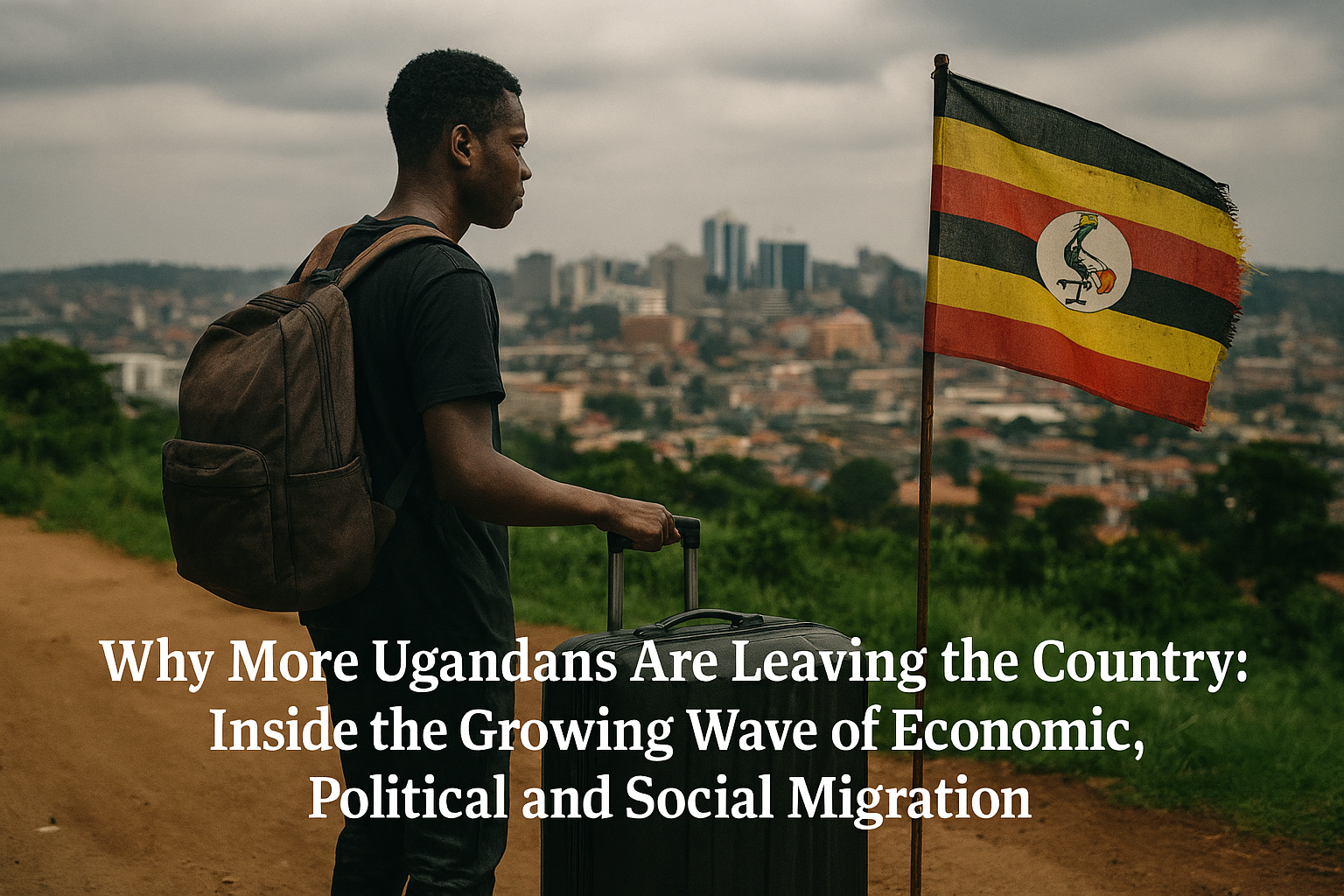
Uganda is witnessing a steady and deeply concerning rise in the number of citizens leaving the country in search of better opportunities abroad. From young graduates and skilled professionals to informal workers and entire families, migration has become not just an option—but a survival strategy for many Ugandans.
Across Kampala, Wakiso, Mukono, and regional towns, conversations increasingly revolve around visas, job contracts abroad, asylum routes, and life outside Uganda. What was once considered a temporary journey is now, for many, a permanent exit.
“Staying in Uganda feels like standing still while life moves on elsewhere,” says a 27-year-old university graduate preparing to relocate to South Africa.
Economic Pressures Driving the Exodus
At the heart of this migration trend is the economy. Uganda’s rising cost of living, combined with stagnant wages and limited job creation, has left many citizens struggling to meet basic needs. Fuel prices, food costs, rent, and transport expenses continue to rise, while employment opportunities—especially for the youth—remain scarce.
Despite graduating thousands of students annually, Uganda’s economy absorbs only a fraction into formal employment. Many graduates find themselves underemployed or jobless years after completing university.
“A degree in Uganda no longer guarantees dignity or financial security,” says an unemployed economics graduate from Makerere University.
For skilled workers such as nurses, teachers, engineers, and technicians, foreign job markets offer salaries several times higher than what is available locally. Countries in Southern Africa, the Middle East, Europe, and North America have become attractive destinations.
Youth Unemployment and Loss of Hope
Uganda has one of the youngest populations in the world. However, for many young people, this demographic advantage has turned into a burden. Youth unemployment and underemployment have fueled frustration, anxiety, and a sense of abandonment.
Young Ugandans increasingly believe that merit, hard work, and innovation are not enough to succeed within the country. Many say opportunities are limited by corruption, patronage networks, and political loyalty rather than competence.
“You either know someone or you leave the country,” says a youth activist in Kampala.
This perception has pushed thousands to seek opportunities abroad—legally and illegally—often risking exploitation, detention, or deportation.
Political Climate and Civic Space
Beyond economic hardship, Uganda’s political environment plays a significant role in migration decisions. A shrinking civic space, repeated arrests of opposition figures, restrictions on protests, and concerns over freedom of expression have created an atmosphere of fear and uncertainty.
Activists, journalists, academics, and politically active youth report increased surveillance and harassment, prompting many to seek safety outside the country.
“I did not leave because I hated Uganda; I left because I feared what staying might cost me,” says a Ugandan journalist now living in exile.
As the country approaches the 2026 general elections, political tensions have heightened, further accelerating migration—particularly among politically engaged citizens.
The Role of Social Media and Diaspora Influence
Social media has also played a powerful role in shaping migration aspirations. Platforms like TikTok, Facebook, and YouTube are filled with stories of Ugandans thriving abroad—working, studying, and living what appears to be a more stable life.
Diaspora communities actively share information about jobs, visas, and migration routes, sometimes downplaying the challenges involved. While these stories inspire hope, they also create pressure for those left behind.
“Every week, someone I know posts a success story from abroad. It makes staying harder to justify,” says a small business owner in Mbarara.
Brain Drain and National Impact
The growing outflow of skilled professionals has raised concerns about a looming brain drain. Hospitals, schools, and technical sectors are losing experienced workers faster than they can be replaced. This threatens the quality of public services and long-term national development.
Economists warn that while remittances from abroad provide short-term relief for families and contribute to foreign exchange inflows, they cannot replace the loss of human capital needed to build the country.
A Nation at a Crossroads
The rising number of Ugandans leaving the country is more than a migration story—it is a reflection of deeper structural challenges. It raises urgent questions about governance, economic planning, youth inclusion, and the future of the nation.
Unless meaningful reforms are undertaken to create jobs, expand civic freedoms, and restore confidence in public institutions, the exodus is likely to continue.
“People are not running away from Uganda; they are running toward dignity, safety, and opportunity,” says a policy analyst.
As more Ugandans pack their bags, the country faces a critical moment: address the root causes driving citizens away—or risk losing an entire generation to migration.